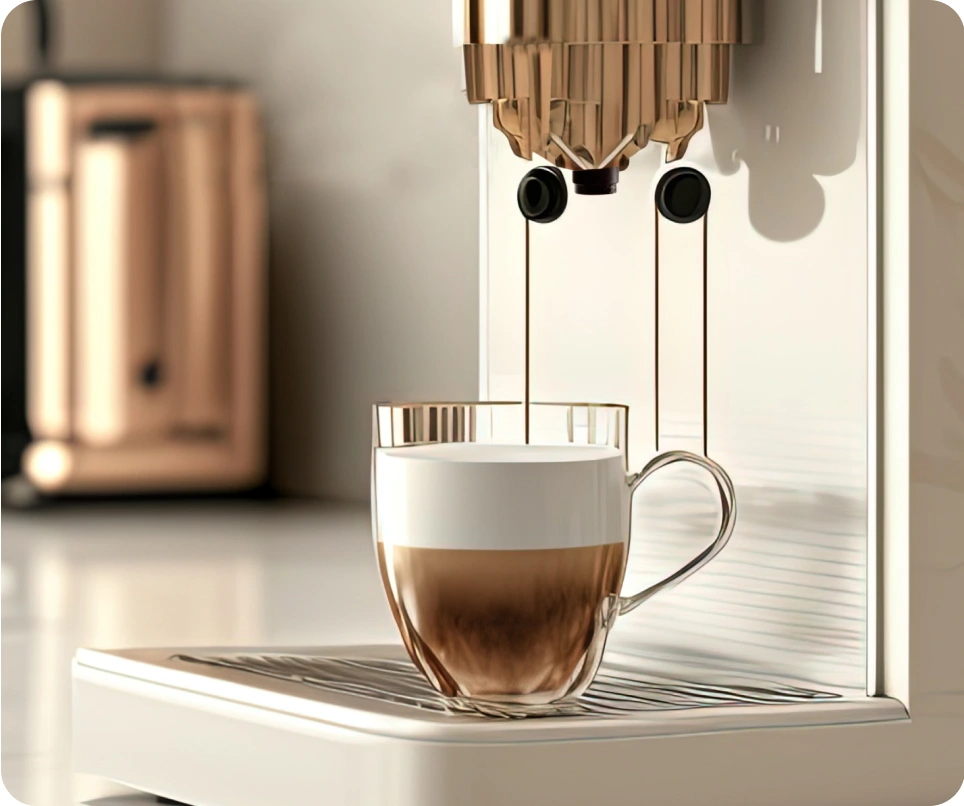
An office coffee machine water line is the direct plumbing connection that feeds water into your coffee machine, so nobody has to keep topping up a tank by hand. That sounds like a small upgrade until your break room runs out of water at 9:12 on a Monday and the whole place suddenly cares a lot about coffee. If you’re trying to understand whether an office coffee machine water line is worth it, how it works, and what it takes to install one, here’s the plain-English version.
What an office coffee machine water line actually is
An office coffee machine water line is exactly what it sounds like: a line that brings water from your building’s plumbing straight into the machine. Instead of filling a reservoir with pitchers or carrying water jugs back and forth, the machine pulls in fresh water automatically whenever it needs it.
In office settings, this matters because coffee demand is rarely neat or predictable. One day the machine gets light use. The next day there’s a client visit, an all-hands meeting, or a rainy Tuesday when half the office decides a second cup sounds smart. A plumbed machine keeps up better because water is always available.
Think of it like the difference between a refrigerator with an ice tray and one connected to a water supply. Both make ice. One just asks a lot less from you.
Plumbed-in vs. pour-over machines
A plumbed-in machine connects directly to a cold-water source. Once installed, it refills itself automatically. A pour-over machine, sometimes called a reservoir or tank-fill machine, has an internal container that you fill manually.
Neither option is universally better. A reservoir machine makes sense when your office has limited plumbing access, low coffee volume, or a temporary setup. A small office suite, a coworking pod, or a space where the machine moves around from time to time can do just fine with manual filling.
But once coffee use becomes steady, the math changes fast. Refill tanks are fine until somebody has to refill them three or four times a day, clean up drips around the counter, and answer the familiar break room complaint: “Is the machine out again?”
Why this matters more in an office than at home
At home, running out of water is annoying. In an office, it interrupts a shared routine.
That’s the difference.
Office coffee machines get used by more people, more often, and usually with less care about the setup behind the scenes. Most people just want to press a button and get their drink. If the tank is empty, nobody wants to become the refill person. A water line removes that friction. It also helps with consistency, because the machine always has the same incoming supply rather than whatever ended up in the pitcher that day.
In a busy break room, convenience is not a luxury feature. It’s part of keeping the whole setup usable.
How an office coffee machine water line works
The basic idea is simple: water travels from your building’s plumbing to your coffee machine through a dedicated line. Along the way, it often passes through a shutoff valve, some tubing, a filter, and sometimes a pressure regulator before entering the machine.
Once connected, the machine controls its own water intake. When it needs water for brewing, steaming, rinsing, or filling an internal boiler or tank, it opens the inlet and draws water in automatically.
That’s the whole concept. The details matter, but the principle is straightforward.
The main parts of the setup
Most office coffee machine water line setups include a few standard parts.
A shutoff valve is the on-off control for the water feeding the machine. If the machine needs service or the line needs work, that valve lets you stop water flow without shutting down the whole sink area.
Tubing carries the water from the building supply to the coffee machine. This is usually flexible, food-safe tubing sized for appliance connections.
Fittings connect one part of the system to another. These are the small hardware pieces that join tubing, valves, filters, and machine inlets. They sound minor, but a bad fitting is one of the fastest ways to create a leak.
A filter treats the incoming water before it reaches the machine. Depending on your local water, that filter may reduce chlorine, sediment, bad taste, or scale-forming minerals.
A pressure regulator controls water pressure if the incoming pressure is higher than the machine likes. Some buildings push water pretty hard. Coffee machines are not impressed by that.
The machine inlet is the connection point where water enters the machine itself. Once water reaches that point, the machine takes over.
What “plumbed” really means
“Plumbed in” can sound like a construction project. Sometimes it is. Often it isn’t.
In many offices, a plumbed coffee machine simply means tapping into a nearby cold-water line under a break room sink, routing tubing neatly to the machine, and installing the right filter and fittings. No torn-up floors. No wall demolition. No dramatic remodel.
The catch is access. If your machine sits on a counter right beside an existing sink cabinet, installation can be pretty straightforward. If the machine is going on an island with no nearby water source, the job gets more involved.
So yes, plumbed means connected to building water. No, it does not automatically mean major construction.
Water line vs. drain line
This part trips people up all the time.
A water line brings fresh water into the machine. A drain line carries wastewater out. Some office coffee machines need only the incoming water line. Others also need a drain connection for rinse cycles, espresso systems, overflow protection, or managing wastewater from repeated brewing and cleaning.
Bean-to-cup machines and office espresso systems often rinse themselves regularly. That water has to go somewhere. Some machines collect it in an internal tray or waste container. Others work better, or only work properly, with a direct drain.
If you skip this detail during planning, you end up with surprises later. Not the fun kind.
Why offices choose a plumbed coffee machine
For busy offices, direct water access is one of the easiest quality-of-life upgrades you can make to your coffee setup. It cuts down daily hassle, supports better consistency, and makes the machine feel like an actual office tool instead of a small appliance that constantly needs attention.
That’s why so many workplace coffee systems are built around plumbed machines. The benefit shows up in little moments all day long.
Fewer interruptions during the workday
The biggest advantage is also the most obvious one: nobody has to keep refilling the water tank.
That means no carrying pitchers from the sink, no checking the reservoir before a meeting rush, and no machine sitting idle because somebody assumed somebody else had already topped it off. Automatic refilling keeps the machine available, which is really what you want in an office. Coffee service should run in the background.
Once a team gets used to that, going back to manual refills feels surprisingly clunky.
More consistent coffee from cup to cup
Coffee quality depends on a lot of variables, but water is one of the big ones. A steady supply helps the machine brew at the right volume and pressure, especially in automatic and bean-to-cup systems.
Add filtration, and consistency gets even better. Water that tastes cleaner and behaves more predictably produces coffee that tastes cleaner and more balanced. If your office serves espresso drinks, americanos, brewed coffee, and hot water from one machine, that stability matters.
You notice it less as a feature and more as the absence of weirdness. Fewer off-tasting cups. Fewer brew errors. Fewer moments where the machine seems slightly out of sorts.
Better fit for growing teams and heavier use
A refill tank can feel totally reasonable for ten people. At fifty, it starts to feel like a bottleneck.
Headcount matters, but usage patterns matter more. A twenty-person office with lots of remote days might use less coffee than a twelve-person office full of espresso fans. A team with clients coming in all day puts different pressure on the setup than a quieter back-office group.
Once you have steady traffic, shared kitchen use, and all-day brewing, a water line starts making less sense as an upgrade and more sense as standard equipment.
Cleaner, tidier break room routines
A plumbed setup usually makes the whole coffee area neater.
You have fewer pitchers sitting around, fewer refill containers on the counter, fewer splashes from hurried top-offs, and less lifting and pouring near electronics. It also reduces the low-level clutter that builds up around a reservoir machine, especially when people improvise with cups or carafes because the proper refill container has wandered off.
It’s not glamorous. It’s just better.
When a water line makes sense for your office
Not every office needs a plumbed machine. But plenty of offices wait too long to get one.
The simplest rule is this: if keeping the machine filled has become a recurring task instead of an occasional one, your office is probably ready.
Signs your office has outgrown a refill tank
Most offices outgrow reservoir machines in obvious ways. The signs just tend to get ignored for a while.
If the water tank runs dry regularly, that’s one sign. If there are long coffee lines because the machine is unavailable during refills, that’s another. If coffee availability depends on one organized person who remembers to maintain the setup, your system is more fragile than it should be.
You’ll also notice multiple refill trips each day, inconsistent drink quality when the machine is low, or general break room complaints that sound small but keep repeating. People don’t usually file a formal objection to a refill tank. They just grumble and use the setup less.
Office sizes and usage patterns that benefit most
Small offices can benefit from a water line if coffee use is steady. A team of eight people who drink two or three cups each and rely on a bean-to-cup machine may get more value from plumbing than a larger hybrid office where half the staff is rarely in.
Midsize offices usually see the clearest payoff. Once coffee demand becomes continuous rather than occasional, convenience compounds. The machine stays available. Break room flow improves. Fewer people need to think about maintenance during the day.
In larger offices, plumbed machines are often the default for a reason. High traffic exposes every weakness in a manual-fill setup.
Volume drives the decision more than headcount. That’s the part worth remembering.
Best-fit machine types
Some coffee machines pair especially well with a direct water line.
Bean-to-cup machines are a common example because they brew frequently, rinse automatically, and often support several drink types from one unit. Commercial brewers also benefit, especially in kitchens with regular coffee demand throughout the day.
Single-cup systems can work either way, but higher-volume office models often make more sense when plumbed. Espresso machines, especially super-automatic models, are also strong candidates because they use water for brewing, steaming, and cleaning. Combo hot beverage units that handle coffee, hot chocolate, tea, or hot water usually benefit too.
In short, the more automatic and the more frequently used the machine is, the more attractive a water line becomes.
What you need before installation
Before choosing a machine or booking installation, it helps to look at the space the way an installer would. Not just where the machine will sit, but what supports it behind the scenes.
Water matters, but it’s only one part of the setup.
Access to a cold-water source
Most office coffee machine water lines connect to a nearby cold-water supply. That usually means a line under a break room sink, inside a cabinet, or in a nearby utility area.
Cold-water supply is standard because the machine heats water internally to the exact temperature it needs. Feeding hot water into a coffee machine is generally not the goal and can create performance issues depending on the machine.
If your break room already has a sink, that’s often a promising starting point. Look under the cabinet and see what kind of water access is available. That quick check tells you a lot.
Enough counter and clearance space
A machine’s footprint is only the beginning.
You also need side and rear clearance for ventilation, tubing, and power cords. Some machines need top clearance for bean hoppers, lids, or refill access to ingredients. Service access matters too. If a technician can’t comfortably reach the machine, even basic maintenance becomes a hassle.
Then there’s the surrounding workspace. Cups, lids, syrups, stirrers, waste bins, and maybe a water machine nearby all affect the flow of the area. The machine needs room to breathe, but your office needs room to use it.
Power requirements
A water line doesn’t solve electrical needs. It just handles water.
Office and commercial coffee machines may require standard outlets, dedicated circuits, or higher voltage depending on the model. Some plug into a normal wall outlet. Others need power that your current break room setup doesn’t have.
This matters early because a machine that fits your coffee preferences may not fit your electrical reality without additional work. Nobody enjoys finding that out on delivery day.
Countertop and cabinet considerations
Coffee machines are heavy, especially once filled, stocked, and in regular use. Your countertop needs to support the load comfortably.
You may also need space to route tubing through the back or base of a cabinet, or in some cases through the countertop itself. The goal is a clean, protected path for the water line, not a loose tube crossing a walkway or getting pinched by a cabinet door.
Neat routing is not just about appearance. It helps protect the line and makes future service easier.
Whether your machine also needs a drain
This deserves a second mention because it affects planning more than people expect.
Some machines create enough rinse water or wastewater that a drain connection makes sense, or is required. Others use internal trays that need to be emptied manually. Knowing which type you’re getting changes placement, installation scope, and service expectations.
It is much easier to account for this before the machine arrives than after it’s already on the counter.
Water quality: the part that changes coffee more than most offices expect
A water line solves convenience. Water quality changes flavor, machine health, and maintenance needs.
That distinction matters. You can have a beautifully installed plumbed coffee machine and still get disappointing coffee if the incoming water is working against you.
Why tap water is not automatically “good enough”
Safe drinking water is not the same thing as coffee-friendly water.
Your office tap water can be perfectly fine for filling a glass and still contain enough chlorine, hardness, or dissolved minerals to affect taste and equipment. Hard water leaves scale behind. Chlorinated water can flatten flavor or add harsh notes. Sediment can interfere with both taste and performance.
That’s why “it’s just tap water” is not a great standard for office coffee.
How filtration helps flavor
Filtration improves coffee by removing or reducing the stuff that gets in the way.
Carbon filtration is commonly used to cut chlorine and odor. Sediment filtration helps catch small particles that can affect taste and wear on components. In the cup, that often means cleaner flavor, a smoother finish, and fewer odd background notes that make coffee taste dull or sharp for no obvious reason.
If your office has ever switched from unfiltered tap water to filtered brewing water, the difference is usually immediate. Not dramatic in a gimmicky way, just noticeably better.
How filtration helps protect the machine
Mineral buildup, usually called scale, is one of the biggest maintenance issues in coffee equipment. If your local water is hard, dissolved minerals slowly collect inside boilers, lines, valves, and brewing components as water heats up and evaporates.
Think of scale like limescale in a kettle, just hidden inside a more expensive machine. Over time, it can reduce heating efficiency, slow water flow, trigger error messages, and shorten the life of internal parts. It also increases service needs, which means more downtime for your office.
Good filtration helps reduce that buildup before it starts.
Choosing the right filter setup
The right filter depends on your water and your machine.
Some offices do well with a simple inline filter that handles chlorine and sediment. Others need scale-reduction filtration because hard water is the bigger issue. In some cases, a carbon filter paired with a mineral-control system makes more sense than either one alone.
The trick is matching filtration to local conditions instead of assuming one cartridge fits every office. A machine in Phoenix and a machine in Portland may need very different water treatment even if the coffee model is identical.
Common installation questions and pain points
Once you start looking into a plumbed machine, the same practical questions come up fast. Most of them have reassuring answers, but it helps to know where the real complications usually are.
Can you install one in a regular office kitchen?
Yes, in many cases you can.
If your office kitchen has a nearby cold-water source, enough counter space, suitable power, and room for the machine to be serviced, installation is often very doable. A standard break room sink area is one of the most common places for a plumbed coffee machine.
The biggest limitations are usually line access and machine size, not the fact that it’s a “regular” office kitchen.
Does installation mean cutting into walls?
Not always, and often not at all.
Many office setups use existing plumbing under a sink and route tubing through cabinetry or along protected, hidden paths. That can make installation fairly clean and low disruption. More complicated layouts may require additional plumbing work, but that’s not the default.
Here’s the thing: “plumbed in” sounds more invasive than many installs actually are.
How long installation usually takes
Simple installations can move pretty quickly, especially when water access is close by and the machine only needs an incoming line. More involved jobs take longer if filtration systems, line routing, countertop modifications, or drain connections are part of the plan.
The exact timeline depends on the room more than the machine. A machine placed near a sink with easy cabinet access can be much faster to install than a smaller machine going into a trickier location.
What matters most is not rushing the setup. A neat, properly fitted installation saves headaches later.
Can the machine be moved later?
Yes, but it’s easier when relocation is part of the original plan.
Accessible shutoff valves, sensible tubing routes, and thoughtful placement make future moves much simpler. If the machine is tucked into a rigid, hard-to-reach setup, moving it later gets more complicated and sometimes more expensive.
Offices change. Layouts shift. That’s normal. A little foresight during installation helps your coffee setup keep up.
Maintenance and cleaning for water-line coffee machines
A plumbed machine reduces certain chores, but it does not become self-managing. If anything, offices sometimes forget about maintenance because the setup feels so automatic once installed.
That’s a mistake.
What the water line reduces
A direct line eliminates manual refills, which is a real improvement. It also cuts down on handling pitchers, water jugs, and refill containers around the break room.
That means fewer interruptions, less opportunity for spills, and less day-to-day attention from office staff. You remove a repetitive task, which is exactly what good equipment should do.
What still needs routine attention
The machine still needs regular cleaning. Brew components need care. Milk systems, if your machine has them, need even more care. Drip trays need emptying unless there’s a drain. Waste bins for grounds or pucks need attention. Exterior surfaces need wiping because office coffee areas collect fingerprints, splashes, and sugar dust fast.
Depending on the machine type and local water quality, descaling or scheduled internal service may also be needed. A water line helps with supply, not with every other part of machine hygiene.
Filter replacement and water system upkeep
Filters only help while they’re still doing their job.
Cartridges need replacement on schedule based on usage volume, water conditions, and manufacturer guidance. Connections should also be checked for wear, slow leaks, or fittings that need tightening. None of this is dramatic, which is why it gets neglected.
The problem is that neglected filtration causes quiet problems. Flavor slips first. Then scale or sediment issues show up later, usually at the most inconvenient time.
Why professional service matters for busy offices
In a busy office, coffee machine downtime affects more than one person’s morning. It affects a whole group.
Scheduled service helps catch wear before it becomes failure, keeps cleaning standards up, and makes sure the water system is still doing what it should. High-use machines simply benefit from regular professional attention, especially when they handle espresso drinks, milk, or constant brewing throughout the day.
If your office depends on the machine, service should be part of the plan, not a response to a breakdown.
Problems you may notice , and what they usually mean
Most water-line problems start small. A slower fill. A strange taste. A damp cabinet floor that wasn’t there last week. Spotting those signs early matters because water and coffee equipment tend to reward quick attention.
Slow filling or weak water flow
If the machine takes longer than usual to fill or brew, the problem often points to water delivery. A clogged filter can restrict flow. So can kinked tubing or a partially closed shutoff valve. Low building water pressure may also be part of the issue.
Because several causes can look similar, it’s smart to start with the obvious external checks rather than assuming the machine itself is failing.
Leaks around the machine or under the counter
Leaks usually come from fittings, connectors, tubing damage, or installation issues. Sometimes a line has loosened over time. Sometimes a connector has worn out. Sometimes the machine is fine and the problem sits one inch outside it.
Any leak deserves prompt attention. Even a slow drip can damage cabinets, warp countertops, or create mold problems if it goes unnoticed behind stored supplies.
Coffee tastes off even though the machine works
Bad flavor with an otherwise functioning machine often points to filtration or cleaning rather than a dramatic mechanical fault.
A stale filter can leave chlorine or off-notes in the cup. Local water conditions can change. Scale buildup inside the machine can affect extraction and temperature. Old coffee oils in brew components can also make fresh coffee taste tired.
When taste changes, the machine is telling you something. It’s just not always telling you in the most obvious way.
Error messages related to water supply
Many modern office machines monitor water input and will throw alerts for low pressure, no incoming water, filling errors, or internal blockages. If those messages persist after basic checks, guessing usually wastes time.
A persistent water-supply alert can mean a filter issue, a valve problem, a blockage, or an internal component that needs service. The machine knows something is wrong. Listening early is cheaper than forcing it to limp along.
Cost: what You’re actually paying for
“Water line cost” sounds like one number. It isn’t.
You’re really paying for a combination of equipment, installation, water treatment, and ongoing upkeep. Once you look at it that way, the pricing makes more sense.
Equipment and install costs
The machine itself is the largest cost in most cases, but the water-line setup adds supporting pieces. Tubing, fittings, shutoff hardware, filtration, and sometimes a pressure regulator all factor in. Plumbing labor may be needed. In some offices, electrical work or countertop modifications add to the total as well.
Simple installs cost less because the room is already doing most of the work. Nearby sink, easy access, good power, enough clearance. More difficult layouts push installation cost up quickly.
Ongoing costs
After installation, the main recurring costs are filter replacements, routine maintenance, service visits, repairs, and occasional parts. If your machine uses milk systems, grinder components, or high-volume brew assemblies, those service needs can be more frequent.
None of this means plumbed machines are expensive mistakes. It just means the true cost is operational, not just upfront.
Where the payoff shows up
The payoff is mostly in time, consistency, and reduced friction.
You save staff time by eliminating refills. You avoid coffee downtime during busy stretches. You get a machine people actually trust to work when they walk up to it. And with the right filtration, you usually get a better-tasting result too.
That kind of payoff can feel soft on paper, but in a functioning office it’s very real. Better coffee setups get used more. Bad ones get bypassed, complained about, or quietly ignored.
Choosing the right office coffee machine water line setup
The right setup depends less on trends and more on fit. Your office size, drink habits, available space, water access, and surrounding break room setup all matter.
A good decision feels boring in the best way. The machine works, the line stays out of sight, and nobody has to think about it much.
Match the setup to how your office drinks coffee
If your office mostly wants quick, basic coffee one cup at a time, a simpler single-cup plumbed setup may be enough. If people expect fresh-ground drinks, cappuccinos, americanos, and regular all-day availability, a bean-to-cup or super-automatic espresso machine makes more sense.
The trick is matching the machine style to actual daily behavior, not the fanciest possible beverage menu. A machine that fits your habits beats a machine that looks impressive but creates extra complexity.
Think beyond coffee alone
Coffee rarely lives alone in a break room.
Hot water for tea, a nearby water machine, syrup storage, cup stations, trash flow, and where people queue all affect whether the setup feels smooth or cramped. If your office offers flavored drinks, cocoa, or shared beverage service, those pieces should fit around the coffee machine rather than getting added as an afterthought.
A good coffee station works like a small traffic pattern. If everybody has to bump elbows to find a lid, the setup isn’t finished.
Questions to ask before you commit
Before choosing a plumbed machine, ask a few grounded questions. How many drinks actually get made each day? Is there a nearby cold-water source? Does the machine need a drain or just an incoming line? What filtration comes with the setup? Who handles ongoing service and filter changes?
Those questions sound basic, but they prevent most of the expensive surprises. Good office coffee decisions usually come from getting the boring details right.
Common misconceptions about office coffee machine water lines
Water-line coffee systems pick up a lot of myths, mostly because plumbing sounds more complicated than it often is. Clearing those up makes the decision much easier.
“Plumbed-in machines are only for huge offices”
Not true.
Large offices often use plumbed machines because the benefits become obvious at scale, but smaller offices can benefit too. If your team uses the machine steadily, values convenience, and wants less interruption, a direct line can make sense even in a modest break room.
This is about usage, not office ego.
“Any tap water will do”
No. Water quality affects both taste and machine life.
Your office can have drinkable tap water and still have water that leaves scale, tastes too chlorinated, or throws off coffee flavor. If you care about reliable performance and decent coffee, the incoming water deserves attention.
“Once it’s installed, it takes care of itself”
Also no.
A plumbed machine still needs cleaning, filter changes, and regular service. The water line removes a daily task. It does not remove maintenance. Confusing those two things is one of the fastest ways to end up with an expensive machine making bad coffee.
“Installation is always a major project”
Sometimes it’s involved. Often it’s pretty manageable.
If you already have accessible plumbing under a nearby sink, the setup may be much simpler than you expect. Many installations use existing connections with minimal disruption, especially in standard office kitchens or break rooms.
What to understand before you choose one
An office coffee machine water line is not just a plumbing feature. It’s a reliability feature. It changes how available your coffee machine feels, how tidy your break room stays, and how much hidden effort goes into keeping drinks flowing through the day.
If your office keeps running into empty tanks, refill chores, or inconsistent coffee access, a plumbed setup is probably worth serious attention. And if you want one simple place to start, look under the break room sink and check what kind of cold-water access is already there.
- Disclaimer: This article is for general informational purposes only. It is not professional advice, a quote, or a service agreement. Conditions at your home or property may differ; contact a qualified professional for an on-site evaluation before making repair, safety, or spending decisions.