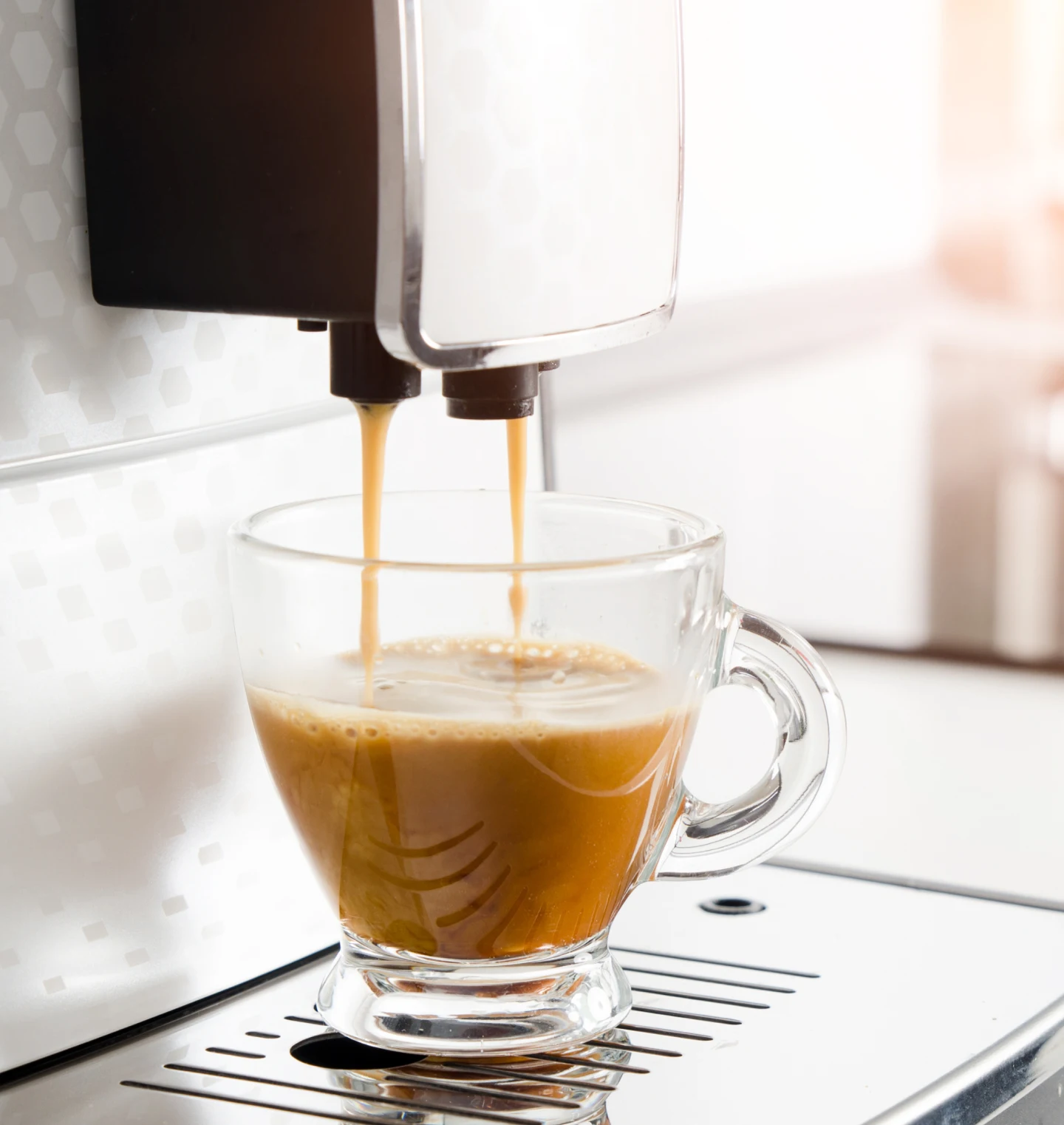
A coffee machine with water tank is a coffee maker that holds its own water in a built-in reservoir instead of relying on a direct plumbing connection. If you’re trying to figure out whether that setup is actually better for your workplace, the short version is yes, often it is, especially when you want good coffee without turning the office kitchen into a mini construction project.
What a coffee machine with a water tank actually is
A coffee machine with water tank is exactly what it sounds like: a machine that stores water inside the unit, usually in a removable or fixed reservoir, so you can fill it manually and brew from there. You pour water into the tank, the machine draws from it, heats it, and turns it into coffee.
That sounds simple because it is. But the term covers more than one kind of machine. A standard drip coffee maker can have a water tank. A bean-to-cup machine can have one too. Plenty of espresso machines use tanks as well, especially the ones designed for smaller offices, meeting rooms, and flexible shared spaces.
That matters because some people hear “water tank” and picture a basic home coffee maker sitting on a kitchen counter. That’s too narrow. In office settings, a coffee machine with water tank can be a serious piece of equipment that makes espresso, americanos, cappuccinos, or regular black coffee all day, as long as the daily demand matches the machine.
Water tank vs plumbed-in machine
The difference comes down to where the machine gets water.
A water tank machine stores water in its own reservoir. You refill it when it runs low. A plumbed-in machine connects directly to your building’s water line, so the machine pulls water automatically without anyone topping it up.
Think of it like a freestanding water jug versus a faucet. Both give you water. One is easier to place almost anywhere, and the other is more hands-off once installed.
That distinction is the whole reason the “are they better?” question comes up. A tank-based machine gives you flexibility. A plumbed-in machine gives you convenience at high volume. Which one feels better depends on your office, your team size, and how much hassle you’re willing to trade for simplicity.
Why this question comes up so often in offices
Office coffee has a way of becoming everybody’s problem at once.
At 8:45 on a Monday morning, nobody wants to hear that the machine needs a plumber, can’t fit the corner counter, or has to be moved because the breakout area became a meeting pod last week. You want coffee that works, fits the space you actually have, and doesn’t become one more thing for facilities to chase.
That’s why this question comes up so often. In most workplaces, you’re not just buying a coffee machine. You’re trying to solve a daily routine. You need something easy to install, simple to manage, reliable during the busiest stretch of the morning, and flexible enough to keep up when your office layout changes or your headcount creeps up.
The catch is that “best” office coffee machine advice often gets pulled from cafés or large hospitality setups. That can send you in the wrong direction. A system that makes perfect sense for a hotel breakfast station can be complete overkill for a 14-person office with a compact kitchenette and a lease that doesn’t allow plumbing changes.
The short answer: yes, for many workplaces they are better
For many offices, a coffee machine with water tank is the better fit.
That’s the direct answer. A tank-based machine is often easier to install, easier to move, and easier to match to the way your team actually works. If your workplace needs flexibility more than nonstop output, this type of machine usually makes more sense than a plumbed-in setup.
Here’s the thing: “better” is not some universal truth. It depends on volume, layout, and maintenance expectations. But for small to mid-size teams, growing companies, leased spaces, breakout areas, and offices testing a subscription or rental setup, tank machines solve more problems than they create.
If your office has 12 people, a decent bean-to-cup machine, and a normal morning rush instead of airport-terminal traffic, a coffee machine with water tank is probably the smart choice. If your office has 80 people and the machine runs all day without a break, that answer changes fast.
How a water tank coffee machine works
The basic process is straightforward. You fill the reservoir, which is just the machine’s built-in water container. The machine heats the water, pushes it through coffee grounds or an internal brewing system, and dispenses the finished drink.
In a drip machine, hot water passes through ground coffee and flows into a pot or carafe. In a bean-to-cup machine, the machine grinds whole beans, heats water, and sends it through the coffee puck under pressure or through a specialized brew unit. In an espresso machine, the same idea applies, but usually with more pressure and more control over the extraction.
What matters in practice is that the water supply is self-contained. You’re not dependent on a nearby water line, which is why these machines are so easy to place in real office environments.
Removable vs built-in water reservoirs
Some machines have removable reservoirs. You lift the tank out, carry it to the sink, fill it, and put it back. Others have built-in tanks that stay inside the machine, so you refill them in place with a jug, pitcher, or bottle.
A removable tank is usually easier to live with. It makes refilling simpler, and cleaning is less awkward because you can rinse and wipe the tank properly at the sink instead of leaning over the machine with a cloth and hoping you reached the corners.
A built-in tank can look neater and save a little space, but it’s less convenient if the machine sits under low cabinets or in a cramped corner. The trick is not to focus only on capacity. Accessibility matters just as much. A tank that holds plenty of water but is annoying to refill becomes irritating very quickly.
Tank size and brew capacity
Tank size determines how much coffee you can make before someone needs to refill the machine. That sounds obvious, but it gets misunderstood all the time.
A 1.8-liter tank does not equal 1.8 liters of coffee in the real world, at least not in a neat one-to-one way for every drink. Some drinks use more water than others. An americano uses more than a straight espresso. A cappuccino uses less water than a large black coffee, though it may use milk as well. Rinse cycles and cleaning cycles also use water.
In office terms, the better question is this: how many drinks can your team get before the refill becomes noticeable? For a small team, a medium tank may be perfectly fine. For a busier kitchen, a tank that seems generous on paper can disappear before the first meeting starts.
The biggest benefits of a coffee machine with a water tank
The appeal of a tank-based machine is not some hidden technical magic. It’s practical. You get fewer installation headaches, more freedom over placement, and a setup that can adapt with your office instead of locking you into one fixed plan.
Easier installation
This is one of the biggest wins.
A coffee machine with water tank usually needs power, counter space, and little else. You plug it in, fill the reservoir, and start using it. No plumbing appointment, no pipe alterations, no waiting around for a technician to make the kitchen corner compatible with your machine.
In a working office, that matters more than people admit. Fast setup means less disruption. If you’re moving into a new space, refreshing the staff kitchen, or adding coffee service to a meeting area, you can get up and running quickly instead of stretching the project into another week of emails and site visits.
More flexible placement
A tank machine can go almost anywhere that makes sense for your team.
That might be the main kitchen. It might be reception. It might be a smaller breakout zone closer to the sales floor, or a second machine in a meeting suite where clients gather. If there’s no nearby water line, that’s fine. You’re not tied to plumbing.
This flexibility is a bigger deal than it seems at first. Office use changes. Teams shift desks. One quiet corner becomes a collaboration area. A machine that can move with those changes is easier to keep useful.
Simple to move or swap out
If your office layout changes, a plumbed machine becomes an anchor. A tank machine becomes furniture with a cord.
That’s a real advantage when your team grows, when departments move around, or when you’re testing different machine types through a subscription or rental arrangement. You can swap out a bean-to-cup unit for something with more drink options, move a machine into a larger kitchenette, or relocate it closer to a high-traffic area without touching the building’s plumbing.
For companies using office coffee subscriptions, this matters even more. A flexible machine setup makes it easier to adjust without making a big permanent commitment too early.
Better for small to mid-size teams
This is where water tank machines really shine.
If your office has a modest team size and wants solid coffee without café-level infrastructure, a tank-based system often lands right in the sweet spot. You get enough daily capacity for normal use, access to better drink quality than a basic kettle-and-instant setup, and less complexity than a commercial plumbed machine.
That balance is hard to beat. You’re not paying for more machine than your team needs, and you’re not dragging everyone back to sad instant coffee because a larger system feels excessive.
Good fit for varied coffee preferences
Offices rarely want one type of coffee anymore. One person wants a long black. Another wants a flat white. Somebody else wants a quick espresso before a client call. A coffee machine with water tank can absolutely handle that, depending on the model.
Many bean-to-cup and espresso machines with reservoirs offer multiple drink options in one unit. That means you can give your team more choice without adding separate machines for every preference. One compact footprint can cover black coffee, espresso-based drinks, and milk-based drinks, which is useful when counter space is limited and expectations are not.
Where water tank machines can fall short
Tank machines are good. They are not magic.
The main drawbacks are easy to understand, and none of them are dealbreakers unless your office setup pushes right into their weak spots.
You have to refill them
At some point, the water runs low and somebody has to top it up. There’s no getting around that.
In a small office, this is usually minor. In a busier office, it can become annoying if nobody owns the task. The machine flashes a low-water alert, three people notice it, and everybody assumes somebody else will deal with it. Ten minutes later, the queue builds and the mood gets weirdly tense over coffee.
That problem is less about the machine and more about the routine. If the tank size matches your usage and somebody checks it as part of the kitchen rhythm, refilling is barely an issue. If the machine is undersized for demand, refilling starts to feel constant.
They need regular cleaning
A tank holds water, and any place that holds water needs cleaning. Add coffee oils, internal rinses, and daily use, and maintenance becomes part of the deal.
This is manageable, not dramatic. But if cleaning slips, taste suffers. Water can go stale. Residue builds up. Scale, which is the mineral buildup left behind by hard water, starts affecting both flavor and machine performance.
A tank machine does not need obsessive attention. It just needs consistent attention. Machines with cleaning reminders make this much easier, especially in shared office kitchens where maintenance can otherwise become everybody’s responsibility and nobody’s job.
They may not suit very high-volume demand
There’s a limit to how much convenience a refillable tank can provide.
If dozens of people are making drinks constantly from early morning through late afternoon, constant refilling gets old fast. Even a large reservoir starts to feel small when usage is relentless. In those environments, a direct water line often makes more sense because it removes one recurring interruption from the day.
A tank machine can still work for 25 or more people in the right setup, especially if coffee habits are spread out and the machine has a generous reservoir. But once demand becomes nonstop, the case for plumbed-in gets much stronger.
Capacity can be misunderstood
Big machine does not always mean big tank.
That mistake catches people all the time. A machine may look substantial because it has a bean hopper, milk system, or large casing, but the water reservoir inside can still be fairly modest. Then the machine arrives, looks impressive on the counter, and needs refilling more often than expected.
That’s why capacity deserves its own check. Don’t guess based on appearance. Look at the actual tank volume and think about your busiest window of use, not just total daily output.
Are coffee machines with water tanks better than plumbed-in machines?
This is the real comparison, and the answer depends less on coffee quality than on how your workplace runs.
A water tank machine is usually better when flexibility, easy setup, and moderate output matter most. A plumbed-in machine is usually better when high volume and low daily intervention matter most. The coffee itself can be excellent with either type. The difference is how you live with the machine.
Setup and installation
Tank machines win on simplicity. You place the machine, plug it in, fill it, and start brewing. That makes them ideal for offices that want a quick rollout or need to avoid alterations to the space.
Plumbed-in machines ask for more upfront work. You need the right location, nearby plumbing, and often professional installation. If your kitchen is already set up for that, fine. If not, installation becomes a project.
For many offices, that alone decides it. The easier option is often the better option.
Daily convenience
Plumbed-in machines have a clear advantage here. You don’t refill the tank because there is no tank to refill. Water flows in automatically, which makes daily use more hands-off.
Tank machines trade some of that convenience for flexibility. You do have to refill them, but in return you can place them where you want, move them when needed, and avoid being tied to one fixed location. For moderate use, that trade is usually worth it. For nonstop use, maybe not.
Maintenance and servicing
Both types need cleaning, descaling, and regular care. Coffee residue does not care how the water gets into the machine.
That said, the maintenance profile feels a little different. Tank machines need reservoir cleaning and refill attention. Plumbed-in machines remove the refill task but can introduce other concerns, like connection issues, leaks, water pressure quirks, or service calls that involve both the machine and the water supply.
In practical terms, tank machines are simpler systems. Fewer external dependencies usually means fewer installation-related complications. But simple does not mean maintenance-free.
Cost over time
A water tank machine often costs less to install because there’s no plumbing work. That lowers the barrier to getting started, which matters if you’re launching a new office coffee setup, trying a subscription plan, or working within a fixed budget.
A plumbed-in machine can cost more upfront if new water access is required. Over time, though, the convenience may justify that cost in high-use environments. If your team drinks enough coffee to make refilling a constant interruption, the labor and annoyance of manual top-ups start to count too.
So the cost question is not just purchase price. It’s setup cost, service complexity, and how much daily friction your team is willing to accept.
Best fit by office size
For small offices, tank machines are usually the obvious choice. You get flexibility, low setup hassle, and enough capacity if you choose well.
For growing teams, tank machines still make a lot of sense, especially if your space may change or you’re not ready to commit to permanent infrastructure. A larger reservoir and a faster machine can comfortably support a medium-sized office.
For larger workplaces, hospitality spaces, or very busy shared environments, plumbed-in machines start to pull ahead. Once your coffee station behaves more like a public service point than a team kitchen, direct water access becomes less luxury and more necessity.
When a water tank machine is the best choice
Some workplaces are almost made for this kind of machine.
Small offices and startups
If your team is small and your setup may change quickly, a coffee machine with water tank is hard to beat. You can get quality coffee without a long installation process, and you won’t feel locked into a system that no longer fits six months later.
That flexibility matters in startups especially. One month you’re ten people. Then you hire five more, move desks, and turn the storage nook into a meeting room. A tank machine keeps up with that kind of change much more easily than a plumbed system.
Meeting rooms and shared spaces
Coffee close to the action is useful.
Putting a machine in a meeting room suite, shared lounge, or breakout space means people don’t have to trek back to the main kitchen every time they want a refill. With a water tank machine, you can do that without worrying about where the water line is. If the machine is good, your coffee service feels more thoughtful with almost no extra infrastructure.
Temporary offices or leased spaces
If you’re in a leased office and don’t want to alter plumbing, tank machines make the decision easy. You avoid installation work, avoid landlord approval headaches, and keep your setup portable if you move.
The same goes for temporary project spaces, pop-up offices, and serviced environments where permanence is not the goal. A self-contained machine is simply easier to live with.
Businesses testing a coffee setup
If you’re trying out an office coffee subscription or machine plan, a water tank model is often the smartest starting point. You can test usage, learn what drinks your team actually chooses, and see whether your current demand really justifies a larger or more permanent system.
That’s a much better way to choose than guessing. Too many offices jump straight to the biggest setup they can imagine, then discover a simpler machine would have covered 90 percent of the need.
When You’re better off choosing something else
A tank machine is not the right answer for every workplace. Some setups are simply better served by another approach.
Large offices with nonstop use
If your machine will be in constant rotation all day, manual refilling becomes a nuisance. That’s the point where convenience stops being a nice extra and starts becoming an operational issue.
A large office with heavy coffee use can burn through a reservoir quickly, especially if people are choosing long drinks and milk drinks throughout the day. In that situation, a plumbed-in machine usually makes more sense.
Sites that already have plumbing in the right place
If your office already has water access exactly where the machine should go, the case for plumbed-in gets stronger. You’re no longer paying a big setup penalty to get hands-free water supply.
At that point, the question becomes simple: do you want the daily ease of automatic water feed, or do you still value the ability to move the machine later? If the location is settled and demand is high, plumbing wins more often.
Workplaces that want fully hands-off operation
Some offices want the coffee setup to disappear into the background as much as possible. No refills, minimal intervention, as little manual fuss as the budget allows.
If that’s your priority, a tank machine may not be the best fit. You can reduce the hassle with a larger reservoir, but you can’t eliminate the refill job completely. A direct water line can.
What to look for in a coffee machine with a water tank
If you’ve decided a tank-based machine makes sense, the next step is choosing one that fits the way your office actually drinks coffee.
Tank capacity
Start here. Capacity shapes the entire daily experience.
A small team that mostly drinks one morning cup can get by with a smaller tank than a team that grabs coffee on arrival, after the 10 a.m. meeting, and again at 2:30. Look at peak use, especially the breakfast-to-lunch window, not just the total number of employees.
Refill tolerance matters too. If nobody minds topping it up once a day, a moderate reservoir is fine. If even one midday refill will irritate everybody, go bigger.
Removable tank design
A removable tank makes life easier. Refilling is faster, cleaning is easier, and you’re less likely to avoid maintenance because the process feels awkward.
If your machine will sit under cabinets or in a tight kitchenette, this feature matters even more. Wrestling a jug into a fixed opening under low clearance gets old quickly.
Brew speed and recovery time
Brew speed is obvious. Recovery time is the pause before the machine is ready to make the next drink.
In a quiet office, recovery time barely matters. In a morning queue, it matters a lot. If six people want coffee in ten minutes, a slow machine creates friction no matter how nice the drinks taste.
This is one of those specs that sounds technical but feels very human in use. Slow recovery turns a coffee break into a waiting line.
Drink options
Decide what your team actually wants.
If most people drink regular black coffee, a simple machine may be enough. If your office expects espresso, americanos, cappuccinos, and milk drinks, you’ll want a bean-to-cup or espresso-focused machine that can deliver variety without becoming fiddly to use.
More drink options are great, but only if the machine keeps the process easy. Nobody wants a machine that needs three menus and a small engineering degree for a flat white.
Cleaning alerts and descaling support
Maintenance reminders are underrated.
A machine that tells you when it needs cleaning, rinsing, or descaling makes shared office use much easier. Descaling means removing mineral buildup from the machine’s internal water system. If your area has hard water, that matters a lot for performance and taste.
Alerts reduce guesswork. And honestly, anything that reduces “I thought somebody else did it” is a good feature in an office kitchen.
Water filtration
Built-in filtration can improve taste and help reduce scale buildup. That’s especially useful if your tap water has a strong mineral taste or leaves white residue on kettles and faucets.
Good coffee starts with good water. Not fancy water, just clean, fresh water that doesn’t fight the beans. A machine with filtration support gives you a little more protection on both flavor and maintenance.
Footprint and placement
Check the machine’s actual size, but also check the space around it.
You need room to refill the tank, empty the grounds bin, clean the drip tray, and possibly access a milk container. A machine that technically fits the counter but can’t be serviced comfortably is not a good fit.
Picture the real scene: mugs nearby, people reaching in before a 9 a.m. call, maybe a cabinet door opening overhead. That practical fit matters more than a polished product photo.
How tank size translates to real office use
Specs are useful, but they don’t mean much until you connect them to everyday coffee habits.
Best for 1, 10 people
For a very small team, a modest tank can work perfectly well. If your office has five to ten people and coffee use is steady but not excessive, you may only need one refill a day, or even less on quieter days.
This kind of setup works well in small studios, compact agencies, and side-office kitchenettes where people want quality coffee without a large machine taking over the room.
Best for 10, 25 people
This is the range where choosing carefully matters most. A tank machine can still be an excellent fit, but you’ll want enough capacity and decent speed to handle the morning rush without constant attention.
For this size office, a mid-to-large reservoir and a machine built for repeated use are usually the sweet spot. You can still avoid plumbing, still keep flexibility, and still offer good coffee, but you need a setup that respects volume.
Best for 25+ people
A large tank can still work for 25 or more people if coffee habits are spread out, not everybody is in the office every day, or the machine is one of several drink stations.
But here’s where the balance starts to tip. If your 25-plus team arrives in waves and empties the machine before 10 a.m., plumbed-in starts to look a lot more sensible. A big tank helps, but only to a point.
Does water source affect coffee quality?
Yes, absolutely.
The machine matters, the beans matter, and the water matters more than many people expect. If the water tastes flat, stale, or overly mineral-heavy, the coffee will show it.
Why fresh water makes a noticeable difference
Fresh water makes brighter, cleaner-tasting coffee. Water that has been sitting too long in the reservoir can dull flavor and make the cup feel a little lifeless.
That doesn’t mean you need to obsess over every refill. It just means fresh water is worth treating as part of good coffee, not an afterthought. Topping up with clean water regularly is a simple habit that pays off fast.
Filtered water vs tap water
Filtered water often improves taste, especially if your tap water has a chlorine note or strong mineral presence. It can also help reduce scale inside the machine.
But not all tap water is a problem. In some offices, it’s perfectly fine. The real issue is consistency. If your local water leaves buildup in the kettle after a week, your coffee machine will notice too.
The trick is to match your water approach to your environment. If your water is hard or tastes rough, filtration is worth it. If your water is already clean and neutral, basic good maintenance may be enough.
The cleaning-taste connection
Poor cleaning affects flavor more than many people realize. A neglected tank, old rinse water, and residue in internal lines can make even good beans taste disappointing.
If coffee suddenly tastes off, don’t blame the beans first. Check the water, the tank, and the cleaning routine. In a lot of offices, that’s where the real issue starts.
Common myths about coffee machines with water tanks
There are a few stubborn ideas about tank machines that don’t really hold up once you’ve used them in a proper office setting.
“A water tank means lower quality coffee”
No. Brew quality depends much more on the brewing system, water quality, beans, grind, and maintenance than on whether the water comes from a tank or a pipe.
A great bean-to-cup machine with a clean reservoir and fresh filtered water can make far better coffee than a poorly maintained plumbed-in machine. The water source setup is not the quality shortcut people sometimes assume it is.
“They’re Only for home use”
Also no.
Many tank-based machines are designed specifically for offices, small commercial spaces, meeting suites, and shared kitchens. If your workplace is small to mid-size, this type of machine can be one of the most sensible professional options available.
“Bigger tank always means better”
Not necessarily. A larger tank reduces refill frequency, but it also takes up more space and can encourage water to sit longer if your office has uneven usage.
If the machine is oversized for your actual demand, you’re not gaining much. The best tank size is the one that fits your real usage pattern, not the biggest number on the spec sheet.
“Refilling is always a hassle”
It can be, if the tank is too small or awkward to access. But in the right setup, refilling is minor.
A well-sized reservoir, a removable tank, and a simple office routine usually turn this into a small task rather than a daily annoyance. Like replacing the water cooler bottle or topping up milk in the fridge, it’s only a problem when the system around it is poor.
How to decide if a water tank machine is right for your workplace
By this point, the decision usually becomes pretty clear. The right choice depends on how many drinks your team makes, where the machine needs to live, how much flexibility you need, and how comfortable your workplace is with light routine maintenance.
If your office has moderate coffee demand, limited or changing space, and no strong desire to install plumbing, a coffee machine with water tank is often the right answer. If your environment has heavy nonstop use and you want the lowest-touch daily operation possible, a plumbed-in machine starts to make more sense.
A simple decision checklist
Choose a water tank machine if your setup sounds like this: you want fast installation, flexible placement, moderate daily output, and the option to move or swap the machine later without hassle.
Choose a plumbed-in machine if your setup sounds like this: you have high daily drink volume, stable machine placement, available plumbing, and a strong preference for minimizing refill tasks.
That’s really the split. Flexibility and simplicity on one side. High-volume convenience on the other.
The best next step before you choose
Before choosing any machine, count how many coffees your team actually drinks between breakfast and lunch.
Not guesses. Not “probably a lot.” Count the real number for a few normal workdays. That one detail gives you a grounded starting point for tank size, machine speed, and whether a coffee machine with water tank will feel convenient or frustrating in your space. Get that number first, and the rest of the decision gets much easier.
- Disclaimer: This article is for general informational purposes only. It is not professional advice, a quote, or a service agreement. Conditions at your home or property may differ; contact a qualified professional for an on-site evaluation before making repair, safety, or spending decisions.