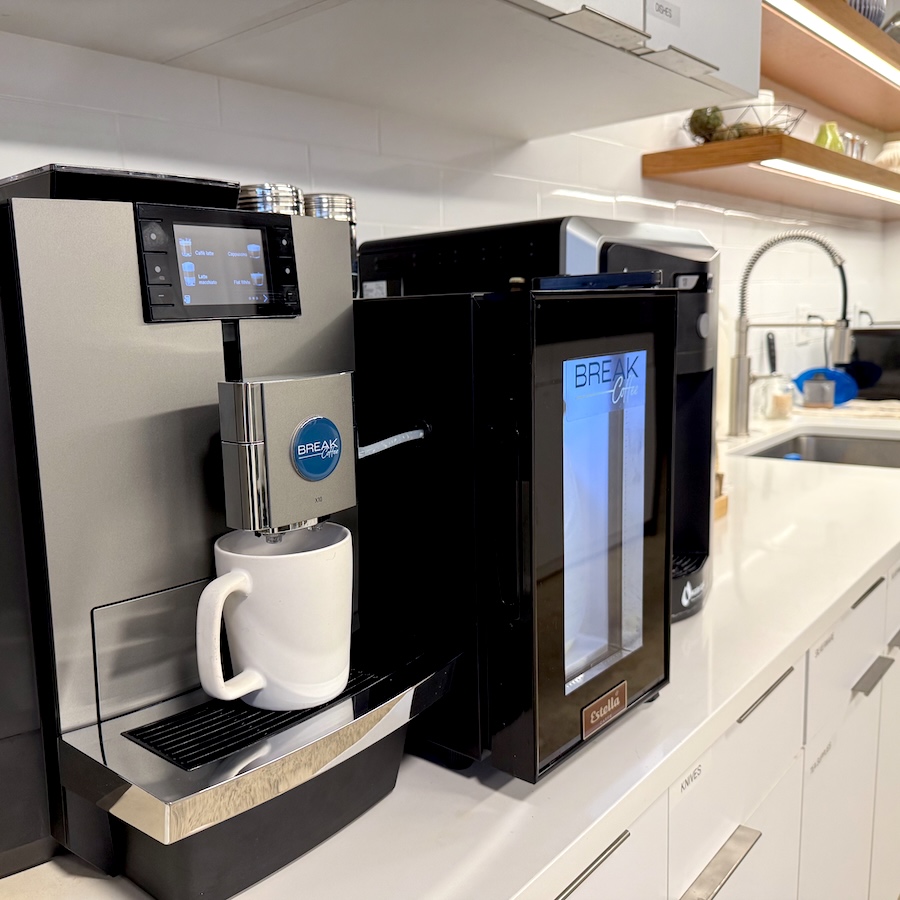
A commercial coffee machine is a coffee maker built for heavy daily use, faster output, and more consistent results than a home machine. If your coffee setup starts falling apart every weekday around 8:30 a.m., this is usually the upgrade that fixes it, and the difference is bigger than most people expect.
What a commercial coffee machine actually is
A commercial coffee machine is designed to make a lot of coffee, make it quickly, and keep doing that without getting temperamental. That matters in places where coffee is part of the daily routine, not just an occasional treat. An office kitchen, break room, showroom, café, or waiting area asks much more from a machine than a home counter does.
Here’s the thing: “commercial” does not just mean larger. It means the machine is built to handle repeated use, peak demand, and less-than-gentle treatment. Buttons get pressed all morning, water tanks get drained fast, and no one wants to troubleshoot a blinking light before the first meeting starts.
How it differs from a home coffee maker
A home coffee maker is like a ladder you pull out once in a while. A commercial coffee machine is the one that gets used every weekday by everyone in the building. The parts inside are stronger, the brew speed is faster, and the machine is made to hold up under regular pressure.
You’ll usually get a bigger water capacity, more output in less time, and better temperature stability, which just means the coffee tastes more consistent from cup to cup. Durability is a huge part of the difference too. A consumer machine can work fine in a small office for a while, but once it starts running nonstop, breakdowns and weak coffee tend to show up fast.
The main types of commercial coffee machines
“Commercial coffee machine” is a big category, not one single kind of machine. The best fit depends on how many drinks you need, what kind of coffee people expect, and how much simplicity matters in your space.
Batch brewers
Batch brewers are the familiar workhorses. These are commercial drip coffee machines that make full pots or airpots quickly, and they’re a great fit when people mainly want regular coffee without a lot of decision-making.
In an office, meeting room, hotel breakfast area, or church kitchen, this setup often makes the most sense. It is easy to use, easy to refill, and there is almost no learning curve. If your goal is to keep coffee ready for a steady flow of people, batch brewing gets the job done without fuss.
Bean-to-cup machines
Bean-to-cup machines do most of the work for you. They grind whole beans, brew the drink, and in many cases handle milk-based drinks too, all from a touchscreen or button menu.
That makes them popular in workplaces that want better coffee without hiring someone to stand behind a machine. If your team wants cappuccinos, lattes, americanos, and regular coffee, but no one wants to learn barista skills, this style hits a sweet spot. The appeal is simple: better drinks, less mess, very little guesswork.
Commercial espresso machines
Commercial espresso machines are built for higher-performance brewing, especially for espresso and milk drinks. If you hear terms like group heads and boilers, here’s the plain-English version: group heads are the spots where espresso is brewed, and boilers are what heat the water and steam.
These machines offer more control and higher drink quality, but they also ask more from your setup. Some make sense in cafés, hospitality spaces, or premium office environments where coffee is part of the experience. If all you need is straightforward drip coffee for a busy break room, this is often more machine than you need.
Single-serve and pod-based commercial machines
Single-serve commercial machines focus on convenience. Each person makes one drink at a time, often with pods or capsules, and cleanup stays pretty minimal.
For lower-volume offices or spaces where drink preferences vary a lot, this can work well. The tradeoff is cost and flexibility. Per-cup pricing is usually higher, and your options are tied to the pod system you choose. It is easy, but not always the most economical choice once demand climbs.
Who actually needs a commercial coffee machine
Not every workplace needs a commercial setup. But if coffee has become a daily bottleneck, a reliability problem, or a quiet source of complaints, then yes, you probably do.
Offices with steady daily demand
The clearest sign is volume. If the coffee pot is empty by mid-morning, people are waiting around for the next brew cycle, or someone is constantly refilling water and grounds, your current setup is undersized.
Picture Monday at 9:05 a.m. The first pot is already gone, two people are standing at the counter, and someone is heading to the café down the block because the machine cannot keep up. That is not really a coffee problem anymore. It is a workflow problem.
Businesses that want better coffee without a full café setup
A commercial coffee machine also makes sense outside a traditional office. Coworking spaces, salons, dealerships, gyms, churches, waiting rooms, and showrooms all benefit from offering reliable coffee without building a full-service café.
Coffee changes how a space feels. A decent cup in a waiting area makes the wait feel shorter. Good coffee in a showroom makes the visit feel more thoughtful. In a shared workspace, it becomes part of the reason people like being there in the first place.
Teams that need consistency, speed, and less fuss
Sometimes the need is not sheer volume. Sometimes it is the daily annoyance of an unreliable setup. Commercial machines are valuable when you want the same result every time, with less tinkering and fewer interruptions.
That means faster brewing, easier cleanup, less downtime, and fewer little rituals to get one decent cup. Push a button, get the drink, move on. Honestly, that reliability is often the real upgrade.
How to tell if your current setup is no longer enough
Most offices do not replace a coffee setup because of one dramatic failure. The change usually comes after months of patching the same problem over and over.
Your machine struggles with volume
If brew times feel slow during peak hours, if the water reservoir needs constant refilling, or if the machine overheats after a rush, your setup is telling you something. It cannot handle your actual demand.
The catch is that waiting adds up. When five people lose four minutes each during the morning rush, that is time gone every single day. If your coffee station creates a line, it is already costing more than it looks.
You’re Replacing or repairing consumer machines too often
A home-grade machine in a busy workplace usually has a short, rough life. You start noticing inconsistent brewing, strange noises, leaks, or a burner that never quite gets hot enough again.
Replacing one inexpensive machine every few months can feel cheaper in the moment. It usually is not. If your office keeps cycling through consumer models, that is a strong sign you need equipment built for real daily use.
Coffee quality has become part of the workplace experience
At some point, coffee stops being an afterthought. It becomes part of the everyday experience of being at work, visiting your space, or waiting for an appointment.
That does not mean you need latte art and a polished espresso bar. It just means quality starts to matter because people notice it every day. Better coffee can improve convenience, make guests more comfortable, and cut down on those constant coffee runs that pull people out of the building.
What to look for in a commercial coffee machine
A good machine is not just the one with the longest menu or the flashiest screen. It is the one that fits your actual demand and your space.
Brewing capacity and daily output
Start with cups per day and peak demand windows. How many people use the machine, and how many drinks get made in the busiest 30 to 60 minutes?
That matters more than labels like “small office” or “large office.” A team of 20 that all grabs coffee between 8:45 and 9:15 needs a different setup than a team of 40 with staggered schedules. Match the machine to your busiest stretch, not your average quiet hour.
Drink options and ease of use
Think about what people actually drink. If plain coffee covers almost everything, a batch brewer may be perfect. If your team expects espresso drinks, hot water for tea, or multiple roast options, you need a machine that handles that mix without becoming confusing.
Ease of use matters more than buyers sometimes expect. If lots of different people will use the machine, the interface should be simple enough that no one needs instructions taped to the wall.
Plumbing, power, and counter space
This is where surprises happen. Some machines are pour-over models that you fill by hand. Others need a direct water line. Some plug into a standard outlet, while larger units may need dedicated power.
Then there’s space. Not just the machine footprint, but room for cups, beans, filters, drainage, and cleaning access. A machine can look perfect on paper and still be wrong for your break room if installation turns into a puzzle.
Cleaning, maintenance, and service support
Every machine needs care. That includes daily cleaning, regular descaling, water filtration, and occasional part replacement.
A fancy drink menu is nice, but only if the machine stays running smoothly. Service support matters a lot here, especially in workplaces that do not want to troubleshoot repairs themselves. That is one reason a managed coffee subscription can be appealing: equipment, service, filters, and supplies are often bundled into one setup instead of becoming five separate chores.
Common questions about commercial coffee machines
How much does a commercial coffee machine cost?
Cost depends heavily on type. A basic commercial batch brewer can be relatively affordable, while bean-to-cup machines and commercial espresso equipment can run much higher. Total cost also includes installation, water filtration, cleaning products, service, and ongoing coffee supplies. The machine price is only part of the picture.
Can a commercial coffee machine be used in an office?
Yes, and offices are one of the best use cases. If your team drinks coffee every day, wants a better experience than a basic home drip machine can offer, or needs a setup that holds up under steady use, a commercial machine fits naturally.
Do you need a water line for a commercial coffee machine?
Some machines need a water line, and some do not. Plumbed-in machines connect directly to your water supply, which is convenient for higher volume. Fill-by-hand models are easier to place and can work well in smaller spaces. Either way, water filtration matters because poor water quality affects both taste and machine lifespan.
Is renting or subscribing better than buying outright?
A subscription or rental often makes sense when you want lower upfront cost, built-in service, easier upgrades, and supply support. Buying outright can work if you want full ownership and already have a plan for maintenance. If your priority is simplicity, a managed setup is usually the easier path.
The best fit comes down to volume, drinks, and daily use
Choosing a commercial coffee machine gets much simpler once you stop thinking in product categories and start thinking in real moments. How many people use it, what do they drink, and how hard does the machine work during the busiest part of the day?
Check your busiest coffee window and count the cups. That one small step makes the right choice much clearer, and it usually tells you right away whether your current setup is keeping up or quietly holding everyone back.
- Disclaimer: This article is for general informational purposes only. It is not professional advice, a quote, or a service agreement. Conditions at your home or property may differ; contact a qualified professional for an on-site evaluation before making repair, safety, or spending decisions.