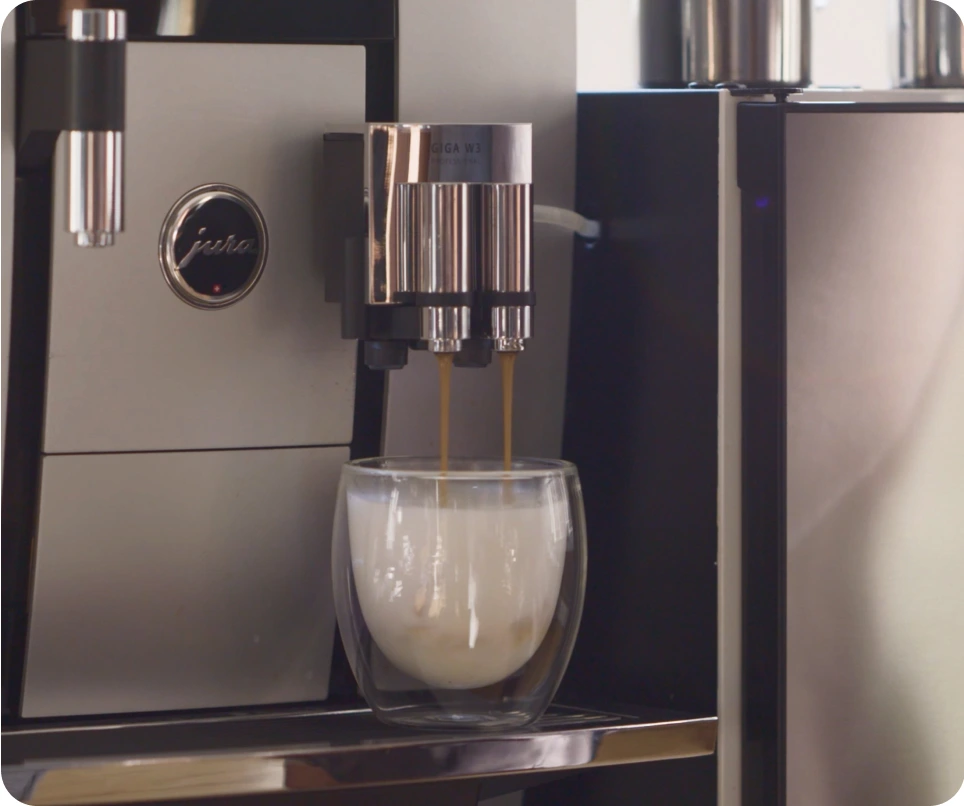
An office coffee machine’s capacity is not just about cups, it’s about how many users office coffee machine can handle before the morning rush turns into a line of annoyed coworkers. Get this right, and coffee feels effortless. Get it wrong, and by 9:05 a.m. someone is already heading to the café down the street.
What office coffee machine capacity actually means
Capacity sounds simple, but it usually gets reduced to the wrong number. A machine might say it can make 100 cups a day, yet still struggle in a busy office because those cups are needed in short bursts, not evenly across eight hours.
Here’s the thing: real capacity means how many people your machine can serve comfortably. That includes brew speed, drink type, water and bean storage, milk handling, and how often somebody has to stop and refill or empty it. A machine is not truly serving your office if it keeps pausing for attention.
Three numbers matter, and they are not interchangeable. User count is how many people may use the machine. Daily cups is the total number of drinks made across the day. Peak-time demand is how many drinks are needed during the busiest stretch, usually first thing in the morning or right after lunch. That last number is the catch most offices miss.
Why headcount alone Doesn’t tell you the full story
A 20-person office can be easy for one machine, or surprisingly hard. It depends on habits.
If your team comes in on staggered schedules, drinks mostly black coffee, and averages one cup each, demand stays pretty gentle. But if everybody shows up Tuesday through Thursday, grabs flat whites before the first meeting, and comes back for a second cup at 2:30 p.m., your machine is handling a very different job.
Hybrid schedules change everything. So do shift patterns, guest traffic, client meetings, and office culture. Some workplaces treat coffee like fuel. Some treat it like a quick social stop. Both count, but the second one often creates clusters of use, and clusters are what expose a weak setup.
The 3 numbers you need before you choose
You do not need a spreadsheet marathon. You just need three estimates.
Start with total people on your busiest in-office day, not your official employee count. Then estimate average cups per person per day. After that, figure out how many cups get made during the busiest 30 to 60 minutes.
That third number tells you whether your machine needs to be merely capable or actually fast. A machine that can produce 60 drinks across a day may still feel too small if 18 of those drinks are needed before 10 a.m.
How to estimate daily cups without overthinking it
A simple rule works well. Light coffee-drinking offices usually land around 1 cup per person per day. Medium-use offices tend to sit around 2 cups. Heavy coffee offices often hit 3 or more.
So if 30 people are in on your busiest day, your rough daily volume looks like this: 30 cups for light use, 60 cups for medium use, and 90 or more for heavy use. It is not perfect, but it is accurate enough to keep you from buying blind.
You will also see the term throughput. That just means how fast the machine can keep up when several people want coffee back-to-back. Think of it like a checkout lane. Total sales matter, but speed at the busy moment matters more.
A simple capacity guide by office size
Office size gives you a useful starting point, as long as you treat it like a starting point and not the whole answer.
Small offices: up to 15 people
For a small office, one good machine is often enough. If usage is light to moderate, a single bean-to-cup machine or even a pod machine can work well, especially if most drinks are made across the day instead of all at once.
At this size, convenience often matters more than endless drink variety. If your team wants fast coffee with little cleanup, simple usually wins. The trouble starts when a small machine gets chosen purely because the office is small, while the actual coffee habits are not.
Mid-size offices: 15 to 50 people
This is where demand becomes less forgiving. More people means more drink preferences, more peak-time traffic, and more chances for the machine to fall behind.
A stronger commercial bean-to-cup machine often fits well here, especially if it has larger bean hoppers, bigger water capacity, and solid milk performance. But sometimes two smaller machines make more sense than one larger unit, particularly if people gather in different areas or the morning rush is intense. One machine can technically serve 40 people. That does not mean 40 people will enjoy using it.
Large offices: 50 to 100 people
Now speed, durability, and refill frequency matter a lot more. A machine may be rated for this user range, but only if demand is spread out. If everybody arrives between 8:45 and 9:15, the setup needs serious throughput.
At this size, larger bean-to-cup systems, batch coffee support, or multiple machines start to look less like a luxury and more like basic planning. A machine that needs constant refilling or emptying will feel undersized fast.
Very large offices: 100+ people
Once your office gets into triple digits, one machine is rarely the answer. Even a high-capacity unit becomes a bottleneck if all demand flows through one pantry.
Commercial-grade setups, multiple locations, plumbed water lines, and reliable service support become part of capacity, not extras. In a large office, machine placement matters almost as much as machine size. A great coffee machine on the wrong floor is still the wrong setup.
How different machine types handle different user counts
Machine type changes what capacity looks like in practice.
Pod machines
Pod machines work best for smaller teams with simple needs. They are quick to use, easy to understand, and cleanup is minimal. That makes them appealing in offices where nobody wants training and nobody wants to manage coffee gear.
The catch is cost per cup and volume. Pods get expensive at higher usage, and these machines are usually not built for heavy back-to-back demand. For 8 people, fine. For 30 people on a busy Tuesday, probably not.
Drip or batch brewers
Batch brewers are excellent when lots of people mostly want regular coffee, fast. A fresh pot can serve several people almost immediately, which makes these systems great for breakfast rushes, meetings, and larger teams.
But there is a tradeoff. If your office expects cappuccinos, lattes, and hot chocolate, a batch brewer will not cover everything. It solves speed for standard coffee, not café-style variety.
Bean-to-cup machines
For many offices, this is the sweet spot. Bean-to-cup machines grind fresh beans, make drinks at the touch of a button, and usually offer enough variety to keep most people happy without slowing everything down too much.
These machines shine in small to mid-size offices and can work in larger ones if the model is properly sized and demand is not too concentrated. But a lighter-duty bean-to-cup machine can start struggling when milk drinks pile up or when refill tasks become constant.
Traditional espresso or high-end commercial machines
These setups make sense when coffee quality matters a lot, drink volume is high, or your space is closer to a hospitality environment than a basic break room. They offer speed, control, and strong output.
But the ask is bigger too. Budget goes up, space needs increase, and service planning matters more. In some offices, that is exactly right. In others, it is paying for a Formula 1 car to drive to the mailbox.
The hidden factors that change how many people a machine can really serve
Brochure numbers are tidy. Real offices are not.
Peak-time traffic and queue length
Ten people needing coffee across an hour is manageable for many machines. Ten people wanting coffee in ten minutes is a different problem.
Output speed matters, but so does drink prep time. Milk-based drinks take longer than black coffee. Touchscreen choices, rinsing cycles, and cup placement all add seconds, and those seconds stack up when a line forms.
Drink menu and customization
The more options you offer, the more time each drink may take. An americano is usually faster than a cappuccino. Hot chocolate, flavored drinks, and milk frothing all add steps or cycle time.
More variety can increase satisfaction, but it can also lower practical capacity. A machine that handles 60 black coffees a day may not handle 60 milk drinks nearly as smoothly.
Water supply, waste, and refill needs
Tank machines are easier to place, but somebody has to refill them. Plumbed machines connect to a water line, which removes a major interruption. That does not make the coffee brew faster by itself, but it does keep the machine available longer.
The same goes for spent grounds bins, drip trays, and milk systems. The moment a machine pauses because a bin is full or the water tank is empty, capacity drops to zero until somebody deals with it.
Cleaning, maintenance, and reliability
Every office machine needs cleaning. Some need quick daily rinses. Some need more involved milk-system cleaning. All need descaling and regular service at some point.
Downtime means the time your machine is out of action, which is exactly when people start buying coffee elsewhere. If your setup only works when everything goes perfectly, it is too small or too fragile for your office.
One machine or more than one?
This is one of the most useful decisions to get right. Bigger is not always better. Smarter is better.
When one larger machine is enough
One larger machine works well when your volume is moderate, your team mostly uses one central pantry, and coffee demand is fairly spread out. It keeps setup simple, takes up less total counter space, and makes service easier because there is only one system to manage.
If your busiest period is not too intense and your machine has enough throughput, one solid commercial unit can be the cleanest answer.
When two machines work better than one
Two machines often beat one when queues are the real problem. Splitting demand shortens wait times, gives you backup during cleaning or service, and helps if your office has multiple busy zones.
A common setup is one machine in the main kitchen and another near meeting rooms or on a second floor. That can outperform one oversized machine simply because people are not all standing in the same line.
How to match capacity to your office setup
By now, the pattern is clear. Capacity is part math, part office behavior.
Questions to ask before you choose
Before picking a machine, look at your busiest real day. How many people are actually in? How many coffees get made before 10 a.m.? Do people mostly drink black coffee, or do milk drinks matter? Is a water line nearby? Who will handle cleaning and refills?
Those answers usually narrow the choice faster than any product page.
Signs your current machine is too small
You can spot an undersized machine without reading a spec sheet. Regular lines in the morning, empty water tanks by mid-morning, weak coffee during busy periods, nonstop alerts, and people giving up and buying coffee elsewhere are all clear signs.
If coffee feels like a small daily annoyance, capacity is probably the reason.
Signs You’re about to overspend
A larger commercial machine is not automatically the better buy. If office attendance is low, coffee use is light, or most advanced drink options go untouched, you may be paying for power your office never uses.
The best machine is not the biggest one. It is the one that matches your actual demand without creating waste, clutter, or service headaches.
Common questions about how many users an office coffee machine can serve
Can one office coffee machine serve 50 people?
Yes, sometimes. If daily volume is moderate, usage is spread out, and the machine is built for commercial use, one machine can serve 50 people. If everybody wants milk drinks at the same time, that same setup can feel too small very quickly.
How many cups per day should an office machine handle?
A simple estimate is 1 to 3 cups per person per day, depending on coffee habits. Multiply your busiest in-office headcount by that range, then check how many of those cups happen during your busiest hour.
Is it better to get one big machine or two smaller ones?
One big machine is simpler. Two smaller ones often handle traffic better and give you backup. If your office has multiple busy areas or sharp rush periods, two machines usually make daily life easier.
Does a plumbed machine serve more people than a tank machine?
Not by brew speed alone. What plumbing does is remove one of the biggest bottlenecks: refilling water. That makes practical capacity higher because the machine stays available longer with less interruption.
What should you do first if you’re not sure about capacity?
Track coffee use for one workweek. Note how many people are in, how many drinks get made, and when the busiest rush hits. Try that one step, and the right machine size usually becomes obvious.
- Disclaimer: This article is for general informational purposes only. It is not professional advice, a quote, or a service agreement. Conditions at your home or property may differ; contact a qualified professional for an on-site evaluation before making repair, safety, or spending decisions.