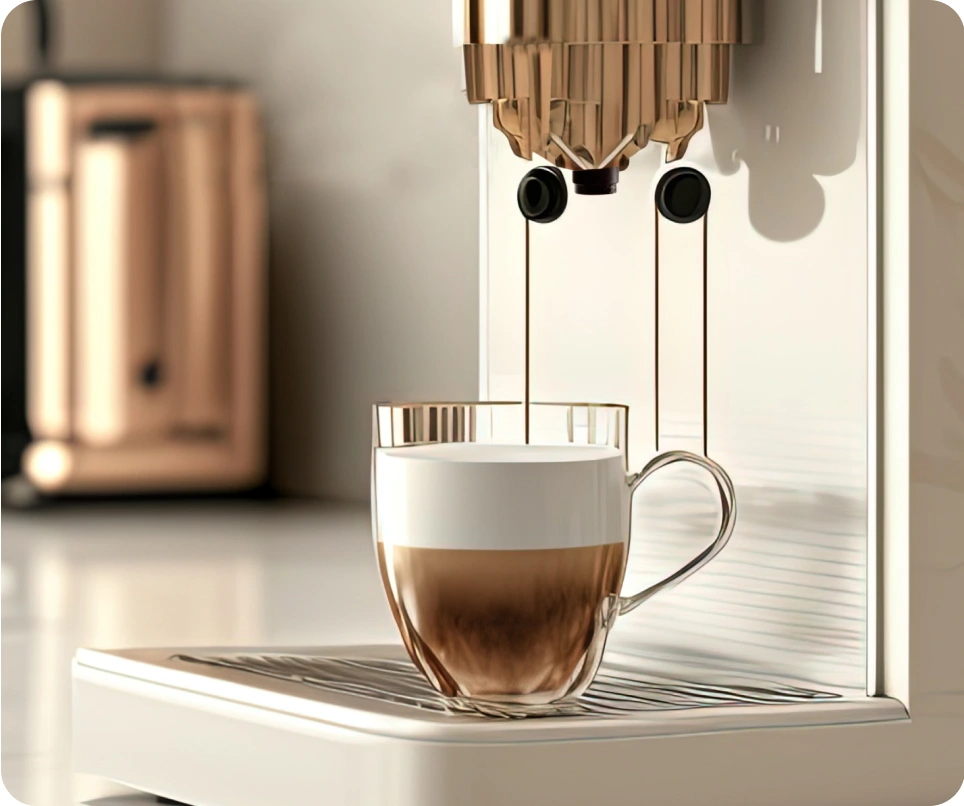
A new coffee machine usually gets placed wherever the old one was.
That may be the existing pantry, a counter beside the refrigerator, or the break room somebody designed when the office was built. On a small floor, that is often fine. On a larger Atlanta office floor, especially one with a mix of conference rooms, private offices, open seating, visitors, and hybrid attendance, the obvious location may not be the location people actually use well.
Our Atlanta operation is built around offices ranging from Midtown and Buckhead towers to Perimeter Center and Marietta-area campuses. The local program uses whole-bean machines, real milk, measured cup counts, and weekly or biweekly concierge service rather than simply dropping off equipment and leaving the facilities team to manage it.
That makes machine placement worth thinking through before installation. A good station should work for the people drinking the coffee and for the team responsible for keeping the station operating.
Start with where people already cross paths
The center of the floor is not always the center of office life.
One Atlanta office may have employees entering from an elevator lobby and walking directly toward team neighborhoods. Another may concentrate activity around meeting rooms because clients and internal groups rotate through them all day. A campus building may have a much more traditional break room where most employees already gather.
Watch the actual routes.
Where do people naturally walk between meetings? Where do they pause? Which pantry is active and which one exists mostly because it appears on the floor plan?
A coffee machine works better when people can reach it without making a special trip to a forgotten corner.
That does not mean putting it directly in the busiest walkway. A station also needs enough room for somebody to order a drink, wait briefly, add anything they need, and leave without blocking everyone else moving through the office.
The goal is a location that is easy to pass through, not one that becomes an obstacle.
Meeting-heavy floors create a different kind of traffic
Our recent Atlanta content already points out that visitor traffic can distort normal cup counts on Midtown floors. A client day can generate considerably more coffee use than employee badge data suggests because guests drink too.
That matters when choosing a station location.
Putting the only machine directly beside a client conference area may make sense for hospitality, but it can also mean employees compete with visitors during meeting-heavy periods. Putting it too far inside an employee-only area may create the opposite problem when hosts continually walk guests across the floor for coffee.
There is no universal answer.
The right question is how the office uses hospitality.
A company with occasional visitors can keep the main station employee-centered. A law, consulting, financial-services, or professional-services floor with frequent meetings may want the coffee location to work naturally for both populations.
This is one reason the two-week trial can be useful as more than a taste test. We bill by actual cups and encourage Atlanta workplaces to use trial data to understand real adoption rather than relying only on theoretical headcount.
During the trial, watch where lines form and who is using the machine.
One machine should not have to serve two offices hiding on the same floor
Large floors can function like separate workplaces.
Sales sits on one side. Operations sits on another. A secure department may have limited access. Executives and conference rooms occupy another section. The company may technically have one address and one employee count while daily movement remains divided.
Before assuming one station is sufficient, walk the longest common route to it.
If one group has to cross the entire floor several times a day while another group is twenty steps away, usage will not be evenly distributed.
That does not automatically justify another machine. It does justify observing whether the planned station can serve the floor without creating inconvenience or unnecessary queues.
Our Atlanta team specifically says service and installation planning are adjusted around different building types and changing floor traffic. More detail sits on the Atlanta about page.
The two-week trial provides a practical time to test that assumption before treating the original station location as permanent.
Facilities access matters after installation too
The employee sees a coffee machine.
The service team sees a station that needs beans, supplies, cleaning, preventative maintenance, troubleshooting, and regular access.
Our Atlanta customers receive weekly or biweekly concierge visits based on usage. Our broader program includes maintenance, repair, and restocking rather than making the office team own those tasks.
The machine therefore should not be installed somewhere that becomes difficult for service staff to reach.
A pantry behind a heavily controlled access point may require coordination every visit. A station squeezed between furniture may be awkward to work around. A location that becomes unavailable whenever a conference room is occupied can turn routine service into a scheduling problem.
Our recent Atlanta blog has already covered the separate challenge of freight docks and vendor restock windows in Midtown towers. Once the supplies make it upstairs, the station itself should be accessible enough that servicing it is straightforward.
Do not place it only for the morning rush
Morning coffee is obvious.
The rest of the workday is more revealing.
Our machines make individual whole-bean drinks including espresso-based beverages with fresh milk, and we measure usage by cups. That means the station may remain active beyond the traditional first-hour coffee rush.
Walk past it after lunch.
Look again during the mid-afternoon meeting block.
See whether the same area remains convenient when the floor changes from quiet individual work to internal meetings and collaboration.
The best location is the place that works across the full workday, not simply where everybody walks at 8:30.
Let the trial answer the placement question
A facilities team does not have to solve this entirely from a floor plan.
We offer Atlanta companies a free two-week trial with equipment and installation included, no long-term contract, and no upfront equipment cost.
Use those two weeks deliberately.
Watch the machine during the busiest employee day. Watch it during a visitor-heavy day. Notice whether people queue into a walkway, whether one department barely uses it because of distance, and whether the service team can access the station without disrupting the office.
Cup counts tell you how much coffee the office used.
Watching the floor tells you whether the machine is in the right place.
Browse more local posts on the Atlanta blog. Placement questions show up differently in Boise and Buffalo as well, or start from the main Break Coffee Co. site.
For Atlanta offices in Midtown, Buckhead, Perimeter Center, Sandy Springs, Marietta, and surrounding business corridors, our local team can be reached at (404) 820-5000 or james.habia@breakcoffeeco.com.