West Loop towers often share freight elevators across tenants, movers, and food service vendors. A booked slot that slips by thirty minutes can push pantry restock past the morning pour band. Facilities feel it as empty milk and a cold brew tap that never got refilled, not as a calendar note on the property manager’s board.
This is not a River North intern story or a long weekend Loop refill. Those patterns matter on other weeks. Here the constraint is the shared freight elevator window and how little time a merchandiser has once the car finally arrives.
How elevator compression empties the pantry
A vendor may clear the dock on time and still wait for a freight car held by another floor’s furniture delivery. By the time the cart reaches your pantry, the first oat carton is gone and the dairy SKU is halfway through what was meant to cover lunch. Badge data can still look normal. The fridge does not.
Published in-office percentages ignore elevator queue length. A floor that looks manageable at ten can feel empty by eleven thirty if restock landed after the peak. Label booked versus actual elevator times on every trial form so week one service matches how your building clears freight.
Read the break room readiness quiz for a quick shared score before a West Loop pilot. The two week trial FAQ covers ambassador training and week one versus week two expectations. Local field notes frame how Chicago teams compare office coffee to larger metros.
Walk the pantry before the next booked slot
Confirm bean levels, milk dates, ice capacity, water filters, and drip trays the afternoon before a known freight-heavy day. Flag anything that needs service while the elevator board still shows your window, not after the line forms at the machine. Stage a spare dairy and oat carton where security allows so a slipped slot does not empty the fridge before noon.
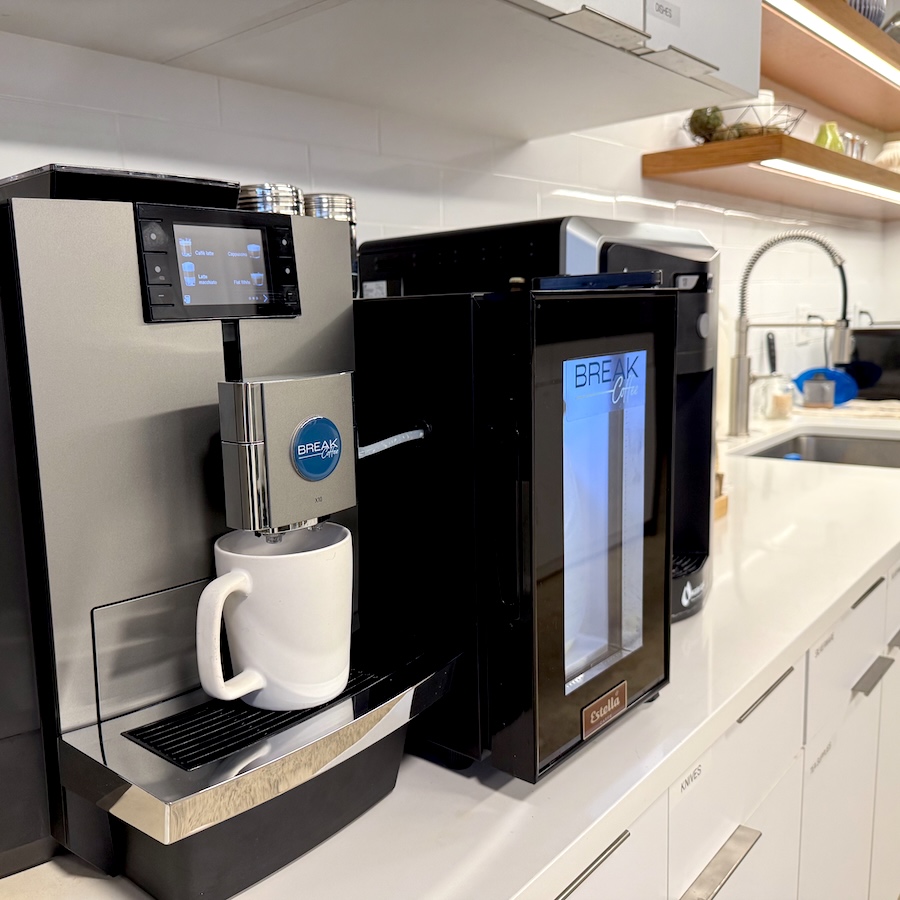
West Loop floors use Swiss-style whole-bean machines with weekly or biweekly service stops, real milk, and cup-based billing. Start with a free two-week trial and no contract. The 100 percent Arabica blend combines Papua New Guinea, Brazil, and Colombia origins roasted in the United States. Replenishment follows measured pours so flavor holds when elevator delays compress the restock window.
Dropping pod machines cuts visible plastic and lifts cup quality in one change. Preventative maintenance rides with service visits so facilities are not opening tickets every time an error code appears during a compressed morning.
Pilot the floor that loses the most elevator time
If you are testing service in the West Loop, pick the address with the tightest freight rules or the longest average hold. Ambassadors should log line length by time block and note when the cart actually reached the floor. That pair of timestamps is what finance needs when someone asks why milk emptied faster than last quarter.
Use the about page when stakeholders want a clear contrast with pod programs. Scan the blog index for recent Chicago angles. Request a trial on the Chicago overview with building type, freight elevator rules, and preferred dock entrance so week one aligns with real receiving practice.
Metrics that survive a slipped elevator
Track peak line length, empty milk times, and the gap between booked elevator and cart-on-floor. Separate morning from afternoon traffic in the appendix so renewal conversations stay grounded in use. On West Loop pilots, cup-based billing ties spend to real pours so elevator delay notes hold up in renewal review.
Complaints climb when milk vanishes after a slipped freight car, not on the quiet day finance modeled. Ambassadors catch that pattern early. Revisit the break room readiness quiz if HR and facilities disagree on readiness before week one.
Document which freight car security assigns to vendors and how long a typical West Loop hold lasts on move-in weeks. Those details belong next to cup counts, not in a chat thread that disappears before renewal.
Heat, indoor lunch, and a shorter window
When Chicago heat keeps teams inside at lunch, afternoon demand stacks on a morning that already ran thin because the elevator slipped. Ice and cold brew turn over faster than a quiet-week order expects. West Loop stewards who note empty tap and ice times hand Patty’s team evidence occupancy slides miss.
The two week trial FAQ summary reads clearer when freight rules and building type are named up front. Pair that with local field notes if last season’s West Loop peaks help explain why restock windows feel tighter now.
Stewardship habits under elevator limits
Treat West Loop pantry restock as freight infrastructure first. Walk the pantry the day before a known multi-tenant move. Confirm milk volume covers the afternoon band if the morning slot slips. Keep ambassadors aware of the elevator board so drip trays and waste get checked before week two summaries go upstairs.
Leadership reviews go smoother when appendix tables name West Loop tower floors separately from any River North or Loop sites on the same portfolio. Unlike freight rules deserve unlike notes.
Closing before the next compressed window
Before renewal, attach elevator delay notes finance can defend: booked versus actual arrival, empty milk times, and peak line length by block. Facilities teams that treat restock as a freight problem, not a soft perk, see fewer surprise outages when West Loop towers stack vendors into the same car.
When freight elevator timing is the constraint on your floor, open the Request a trial form on the Chicago overview. Call 312-813-3088 or email patty.carroll@breakcoffeeco.com with building type, elevator booking rules, and the restock window security will honor. Patty Carroll and the local team can map ambassador setup to your freight schedule before week one begins.