Chicago high-rise break rooms do not get a clean restock window. Merchandisers stage cases before store visits, field teams fill travel mugs between Metra arrivals, and hybrid corporate floors queue behind both on the same Tuesday. Late May adds vendor summits and month-end closes that stack a third traffic layer finance rarely modeled when it sized the refrigerator.
Restocking between merchandiser deliveries is the practical challenge for late May pantry planning: restock windows, cup counts, and service visits have to fit the gaps that actually exist, not a suburban dock story transplanted onto Wacker-adjacent towers.
When the restock truck and the case cart want the same hour
Retail and CPG employers with Chicago headquarters often run morning huddles that pull non-desk roles through the break room on the way to vans and trains. Those bursts look nothing like a steady desk-only pattern. Facilities inherits vendor schedules built for average occupancy, then discovers milk is wrong by ten because merchandiser traffic already moved the baseline.
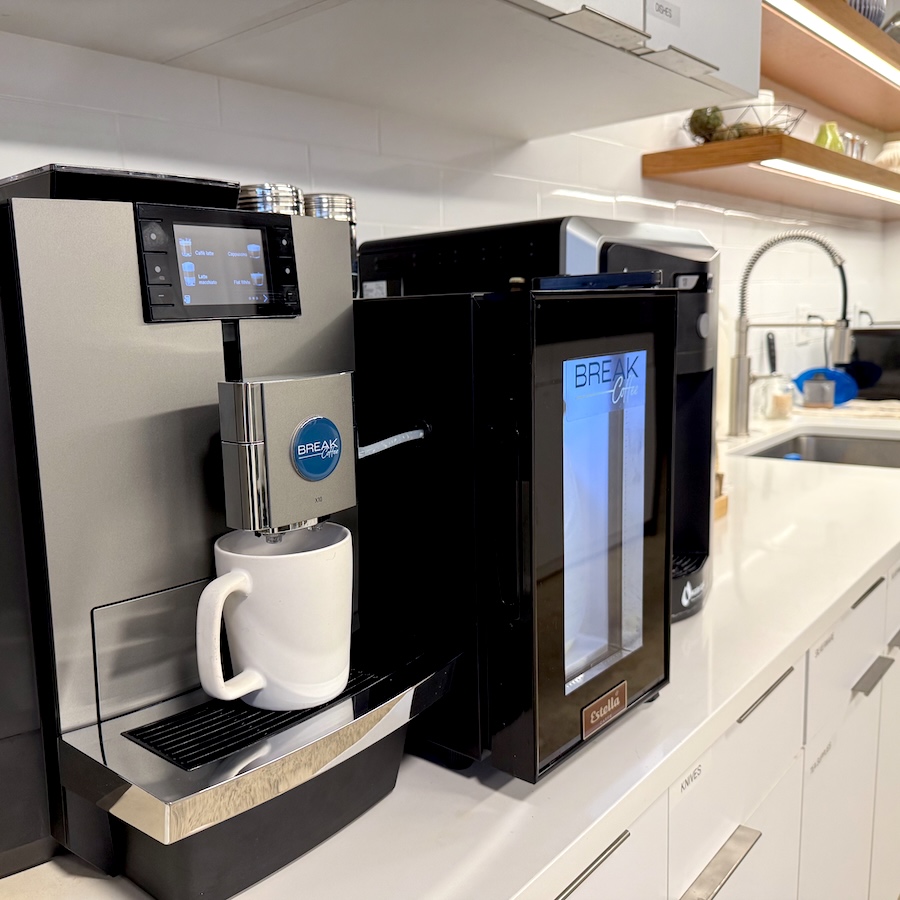
Break Coffee Co. installs Swiss-style whole-bean equipment that grinds per cup, steams real milk, and stays on weekly or biweekly service tuned to measured usage. Cup-based billing ties spend to pours instead of a fixed per-seat line that cannot explain a merchandiser Tuesday to finance.
Milk handling in the gap between deliveries
Oat and dairy splits multiply when sustainability teams standardize oat on one floor and client suites keep whole milk on another. Refrigerators sized for desk-worker peaks fail when field teams stack the same window as merchandisers. Recurring service keeps grinder calibration honest; training on tap splits during week one prevents wrong-milk friction that shows up in surveys before facilities opens a ticket.
The proprietary Arabica blend, sourced from Papua New Guinea, Brazil, and Colombia and roasted in the United States, is replenished on a rhythm matched to real pours so the break room does not smell like yesterday’s roast on the afternoon the building hosts a vendor summit.
Pairing merchandiser traffic with restock timing
The merchandiser delivery windows in Chicago high-rises article explains field and case traffic that desk-only planning misses. This piece focuses on which restock windows should follow that traffic. Read both before renewal season so facilities and finance are not arguing from different peak definitions.
Local field notes still apply for indoor climate along the lakefront band. The break room readiness quiz scores readiness before week one. The two week trial FAQ covers trial mechanics and ambassador training.
Downtown towers versus suburban campuses
A Wacker-adjacent tower and a Schaumburg-style campus can share a brand on the lease and opposite restock patterns. Downtown sees compressed elevator-bank rushes; suburban footprints see parking-lot surges on one anchor day. Share building type and peak windows on the Chicago, IL overview when you request routing.
The grab-and-go cases and break room traffic in the Loop article frames case traffic from a spring angle. Pair both when you label merchandiser-heavy days in the pilot appendix.
Lakefront towers and indoor pantry peaks
Afternoon peaks arrive earlier than winter desk-only models assume. Ordering that ignores real floor traffic creates empty iced stations and idle espresso. Preventative maintenance is included so facilities are not chasing machine-down tickets during the same week finance wants adoption numbers.
Pilot the floor merchandisers actually use
We recommend a free two-week trial, no contract, on the wing merchandisers and field teams use, not the executive floor that stays light on case mornings. Train ambassadors who know freight rules and which service elevator vendors should use.
Use the Request a trial form on the Chicago, IL overview when you are ready. Call 312-813-3088 (+13128133088) or email patty.carroll@breakcoffeeco.com for dock hours and security processes.
Some Loop towers host vendor summits and training days that add load without appearing on hybrid calendars. Name summit weeks when you submit a trial so ordering and service do not treat them as anomalies.
Dock hours on Wacker-adjacent towers often differ from street-level receiving stories employees know. Patty Carroll’s team on the Chicago, IL overview needs freight elevator banks and co-op rules in writing before week one.
Milk discard is a logistics signal, not a blame metric. Heavy discard after a merchandiser morning usually means order size was wrong for that day type. Cup-based billing paired with discard notes gives finance a cleaner renewal story than seat math alone.
When you present pilot data, separate merchandiser-heavy days from desk-only days in the appendix. The two week trial FAQ week-two summary is clearer when day types are labeled. High-rise break rooms that restock in the right gaps and steam milk well under merchandiser load signal operational maturity, not just amenities on a floor plan.