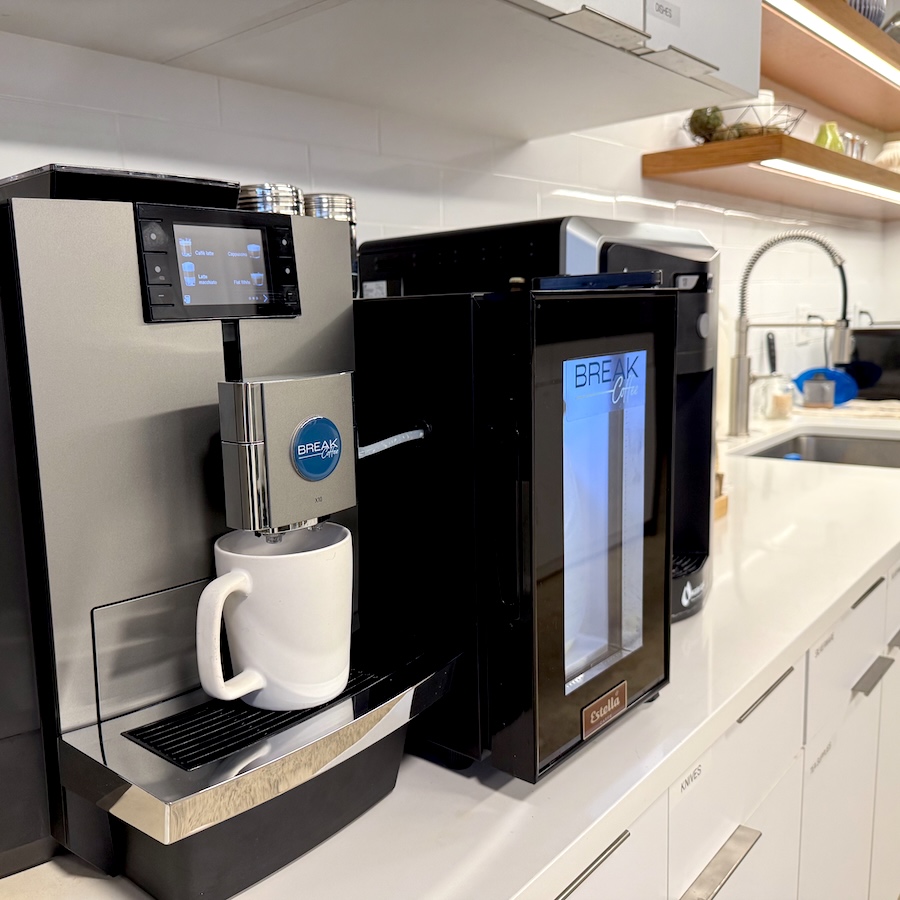
Do not copy one Chicago floor’s coffee inventory onto the next floor. Keep the drink standard the same. Keep the records separate.
A Loop tower, a West Loop pantry, and a suburban headquarters can share beans, milk drinks, and a service expectation. They do not share freight windows, visitor load, or the hour people actually pour. One company average hides a floor that runs dry at 9:15 a.m. and another that wastes product on a light Friday.
Our Chicago route already covers Loop towers, River North, Fulton Market, and suburban campuses. This post is about running one program across floors without pretending those floors drink the same.

Name what stays the same
Employees moving between floors should get the same coffee quality, the same drink choices, and a station that is clean and working. The way an issue gets reported should also stay familiar.
We install whole-bean machines, restock on a weekly or biweekly visit, and bill around measured cups. Those pieces can stay consistent across addresses. Inventory, freight timing, and who watches the pantry between visits cannot.
See the Chicago about page for how the local program is framed for facilities and leadership. The break room readiness quiz is a useful check before you add a second floor.
Give every station its own page
During planning or a two-week trial, keep one short record per station. Include equipment ID, floor access, attendance, peak use, product levels, cleaning ownership, machine alerts, and service history.
Do not turn coffee into a dashboard project. A few checks at the same times each day are enough. Note who was in the building next to the cup total so a quiet holiday week does not become the restock plan.
Photograph the station layout. Write down any machine message before anyone clears it. Note when milk, beans, cups, or cold brew run low. Include what got thrown out at the end of the day and why. That is how you tell a menu mismatch from overstocking.
A Loop floor and a suburban campus should not share one inventory sheet. We already wrote that Loop offices and suburban headquarters should share a standard, not an inventory sheet. The same rule applies floor to floor in one tower.
Count the busy floor first
Choose the floor with the strongest ordinary traffic, the most visitors, or the heaviest meeting schedule. A quiet executive suite gives you a clean install and a bad restock plan.
Write down which days fill, visitor volume, morning arrival, afternoon traffic, shift overlap, and the meeting calendar. Skip holiday weeks when you can. Both trial weeks should include ordinary workdays.
Loop lobby espresso queues on heavy in-office days show how a ground-floor bank can fail on throughput even when weekly occupancy looks normal. A mid-floor pantry can fail the same way if you sized it from the empty floor above it.
Map access per floor, not per company
The written handoff should cover parking or loading, security, elevator or floor access, pantry hours, restricted areas, and a backup contact. Loop and West Loop towers often add freight reservations that a suburban campus never needs.
West Loop freight elevator restock compression and high-rise restock windows are downtown constraints. Copy those windows onto a campus pantry and you over-plan. Ignore them on a tower floor and milk sits at the dock while the station runs down.
Name who inside the office watches product levels and reports board meetings, training days, client events, or temporary closures. The office contact does not fix the machine. They do report a locked pantry, a failed badge, or a schedule change before our truck shows up.
Keep cleaning jobs specific
Everyday counter care and spill response belong to the floor. Periodic equipment service and sanitation belong to the program. Write that split so a shared pantry does not wait for “someone else” to wipe the station.
If two floors share a merchandiser or ice machine, say who owns the check. Shared gear without a named owner is how one floor looks fine and the next floor fails by lunch.
Review each station on its own week
At the end of two weeks, look at total cups, drink mix, peak hours, visitors, waste, cleanliness, access problems, and whether the floor owner kept notes. The two-week trial FAQ covers the commercial basics.
Then ask a local question for each station: did the trial see a normal busy Chicago week on that floor? If not, extend measurement. Do not guess. A program approved on an easy floor often needs an emergency restock the first time the Loop fills up.
Keep a one-page operating plan per station with the busiest periods, normal drink mix, placement, restock rhythm, cleaning jobs, service window, access instructions, and any open issue. Separate the normal program from optional additions such as extra cold brew, more ice, another floor, or event support.
Milk, cold brew, ice, and water still move on different curves. Plan those as separate jobs in the pantry. That is the next operating question after the floor records exist.
Browse more local posts on the Chicago blog, start from the main Break Coffee Co. site, or reach our Chicago team through the contact section. For Loop, River North, West Loop, and surrounding business corridors, call (312) 813-3088 or email patty.carroll@breakcoffeeco.com.