Loop towers have pushed their in-office days into a tight midweek cluster, and the lobby espresso bank feels it before any dashboard does. On a heavy Tuesday or Wednesday, the ground-floor line stacks up at the same twenty minutes as elevators fill, and the queue itself becomes the problem long before the machine runs low.
This is a queue problem, not a freight elevator restock story. The constraint is not when the vendor cart reaches the dock, it is how many people hit one lobby station in the same narrow band when the whole building shows up on the same days.
Why queue length beats seat count
A tower can report the same weekly occupancy and still have a wildly different lobby experience depending on how that presence is distributed. Cluster it into two heavy days and the ground-floor line triples even though the weekly average never moves. Seat maps describe who has a desk, not how many pour in the same fifteen minutes.
Queues cost more than patience. When the lobby line runs long, people skip the machine, satisfaction drops, and the tower’s amenity story weakens even though the equipment is fine. The failure is throughput at peak, not total volume across the week.
Score how your lobby handles peak load with the break room readiness quiz. Pilot timing sits in the two week trial FAQ, and Chicago context is in the local field notes.
Log the line, not just the pours
Ask ambassadors to record lobby line length by time block on heavy in-office days: how many people are waiting at the top of the hour, when the line peaks, and how long a cup takes from queue to hand. Those readings show whether the bottleneck is one machine, one grinder, or one narrow arrival band.
The numbers usually point somewhere finance did not expect. A lobby that pours a modest daily total can still fail at nine forty-five when a full building lands together. That peak, not the day’s sum, is what a second station or a faster cadence has to solve.
Name the driver on each peak. A synchronized in-office day, a floor-wide meeting letting out, and a morning elevator surge are different reasons the line grew. Blended into one lobby average, they hide where throughput actually breaks.
Restock and setup rules matched to the peak
A plan sized to weekly totals under-serves a clustered peak. Loop lobbies with sharp midweek surges often need a protected pre-peak top-up and, on the heaviest banks, a layout that lets two people pour at once rather than a single choke point. The goal is throughput during the surge, not just enough stock for the day.
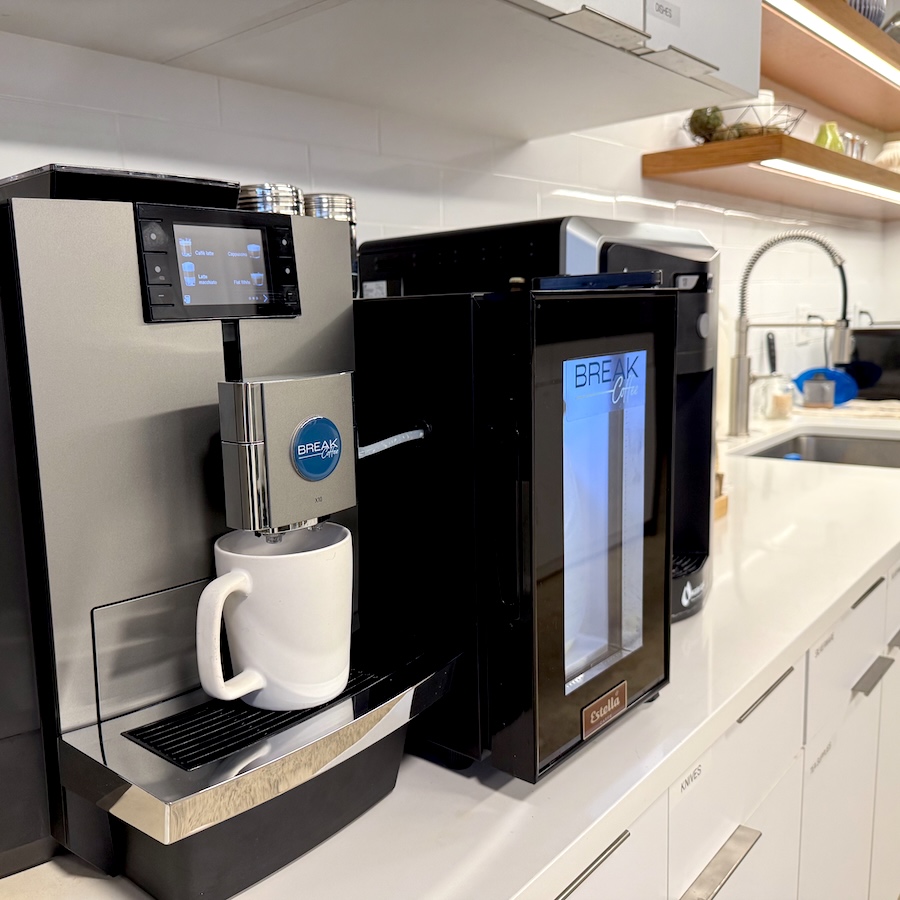
On Chicago floors we install Swiss bean-to-cup machines, run technician visits weekly or biweekly, keep real dairy at the wand, and invoice on cups poured. Cup-based billing fits surge-heavy lobbies because spend follows the peak-day pours instead of a flat estimate that ignores clustering. Our house blend is entirely Arabica, sourced from Papua New Guinea, Brazil, and Colombia and roasted stateside.
Compare that with pod programs on the about page, and scan the blog index for recent Chicago angles.
Pilot the lobby with the longest line
Place a free two-week trial on the ground-floor bank that queues hardest on heavy days, not a quiet upper-floor pantry. Ask ambassadors to log line length and wait time by block so week-two summaries show the peak clearly when someone asks whether the lobby needs more throughput.
Amenity marketing promises a quick, good cup on the way in, and that promise breaks at a ten-deep line even when the coffee is excellent. Solving the peak is what keeps the lobby a selling point on the days the building is full.
Preventative maintenance rides with the cadence on Chicago accounts, so a grinder is not failing at the exact moment the surge hits. Volume-matched service beats a break-fix ticket that lands after the queue already broke.
Presenting the peak without blur
At renewal, put peak-hour line length in one appendix table and daily pour totals in another. Include arrival bands, wait times, and building type. Metered invoices support those tables because spend already followed the heavy days rather than a flattened weekly figure.
Keep the clustered peak out of a single Loop average. A tower with synchronized in-office days and one with steady presence need different lobby setups, and only queue data lets facilities fund throughput where the line actually forms.
Revisit the break room readiness quiz if facilities and human resources disagree on what the lobby should handle on a full midweek day.
Closing the queue gap before renewal
Treat the lobby line as a throughput problem tied to clustered in-office days, not a soft perk. Log the queue, name the peak driver, and let cup billing carry the surge into numbers finance can defend at renewal.
When lobby queue length is the constraint on your building, open the Request a trial form on the Chicago overview. Call 312-813-3088 or email patty.carroll@breakcoffeeco.com with building type, heavy in-office days, and the arrival band that matters most. Patty Carroll and the local team can map ambassador queue logging before week one begins.